Potato Farls (Irish Potato Cakes)
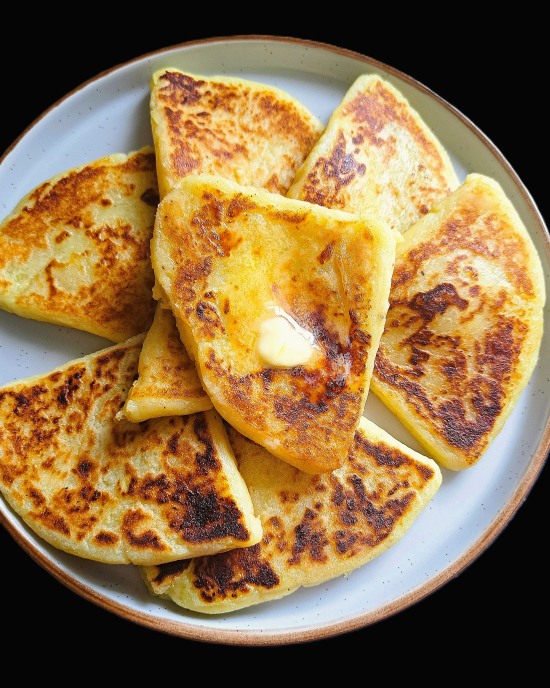
Potato Farls, sometimes called Irish potato cakes, tattie scones, or potato bread, are so easy to make. Containing just seasoned mashed potato, flour, plus optional butter, they’re surprisingly tasty. Fantastic with poached or fried eggs, baked beans and cheese, or in a big traditional breakfast. You can even have them with sweet toppings like jam or maple syrup.
Disclosure: this post contains affiliate links. As an Amazon Associate if you buy via these I may earn a small commission at no extra cost to you.
Jump to Recipe
This post, first published in 2020, has been rewritten, including mostly new images plus FAQs in response to reader queries and comments.
WHAT ARE POTATO FARLS?
Farl is just one of the words used to describe a traditional flat cake made of mashed potato. Depending which part of the British Isles you’re from (i.e. England, Northern Ireland, Scotland, Wales, or the Republic of Ireland), you may also know farls as potato cake, potato bread, tattie scones, or Irish potato bread.
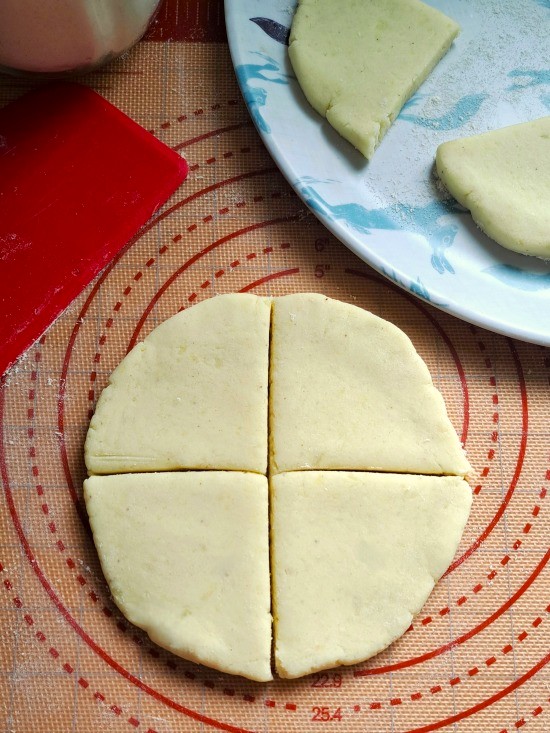
The word farl, although often said to come from the Gaelic for quarter or fourth may have an earlier derivation: the English fardel from Old English fēortha meaning fourth and Middle English del or part. And why the connection with quarter or fourth? Because farls are traditionally made by shaping the dough into a round then cutting into quarters before cooking on a griddle or in a pan.
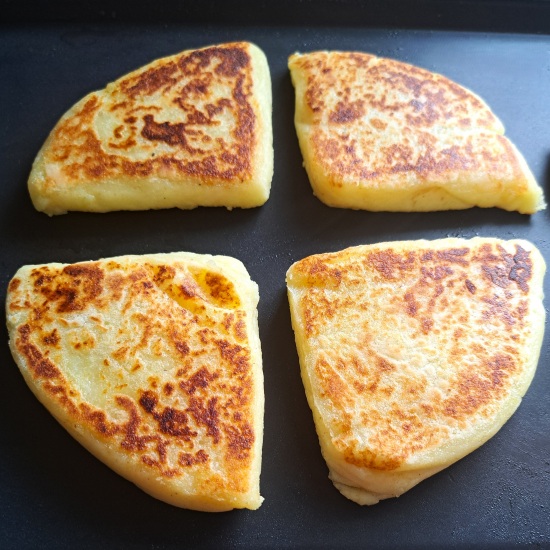
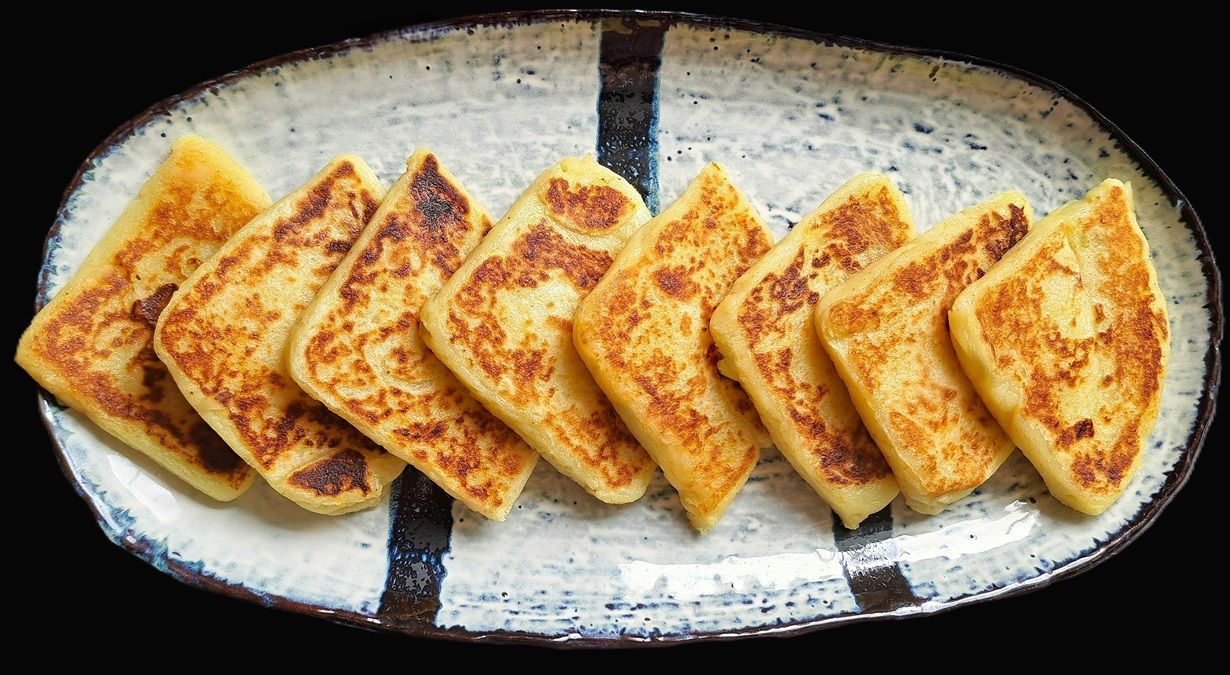
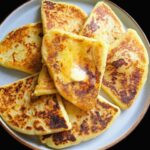
However, purists may notice that some of my Potato Farls (e.g. pic below) are not strictly farls. That’s because I sometimes make one big round and cut it into eighths.
But whatever you call them (I use their various names interchangeably) and however you divide them, if you’re a spud lover you need these gorgeous, pillowy delights in your life.
HOW TO MAKE POTATO FARLS, TATTIE SCONES, POTATO BREAD
You’ll find a recipe card at the end with ingredient amounts and full instructions. But I recommend you read the whole of this post first for extra tips and images to guide you. For the best results use digital scales and metric measurements as these were used to test the recipe.
INGREDIENTS
I’ve seen various combinations of ingredients for potato cakes. Some include eggs, others have heaps of flour. But I find the best Potato Farls are simply mashed potatoes with salt and pepper, a small amount of flour, and (controversial to some) a little butter.
THE POTATOES
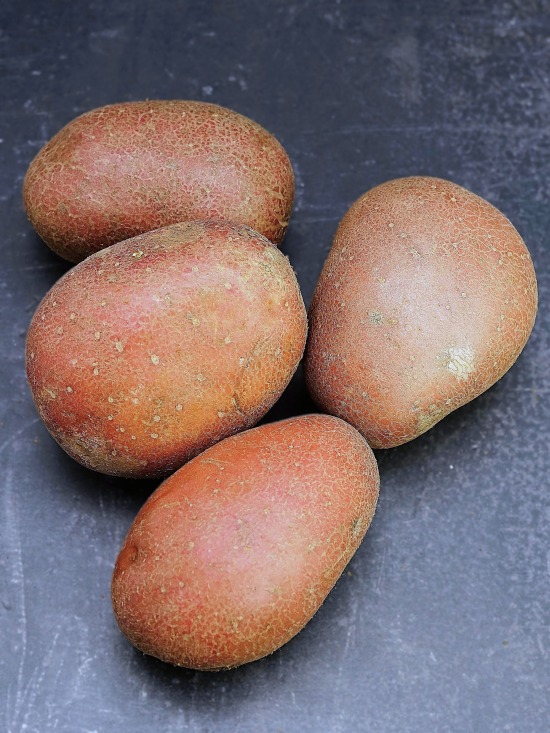
As with any mashed potato, you need to use a floury potato rather than a waxy one. That’s because they become fluffy when cooked and mashed while waxy potatoes will be unpleasantly gluey. My favourite potatoes for making potato cakes are Roosters (pictured below), King Edwards, or Maris Pipers. You can learn about floury vs waxy potato varieties here.
Leftover mashed potatoes or freshly cooked?
Many people consider potato cakes to be a great way of using up leftover mashed potato. However, if you like a buttery or creamy mash (who doesn’t?), this won’t be good for farls. That’s because you’ll need to add more flour to get the softer, fattier mash to hold together. And that means heavier and gluier rather than light and soft.
So, you have two options. 1. Either cook potatoes from scratch just for making farls (it doesn’t take long anyway). 2. If you’re boiling potatoes for mash, add some extra. When drained, take out 350 – 400 grams to make 8 farls then leave to cool. Put in a covered container in the fridge ready to make potato cakes later or the next day.
To peel or not to peel?
When I first posted my recipe for potato farls, I got a very irate comment as I peel my potatoes before boiling. While the poster may be correct that boiling then peeling can preserve more of the nutrients, I think the benefit is so tiny that it’s up to personal taste. Some people find it easier to peel after cooking, others may not want to peel at all. Whichever you decide, you’ll need a minimum of 350 grams of cooked potato. So, if peeling after cooking, you’ll need to start with a larger amount than that.
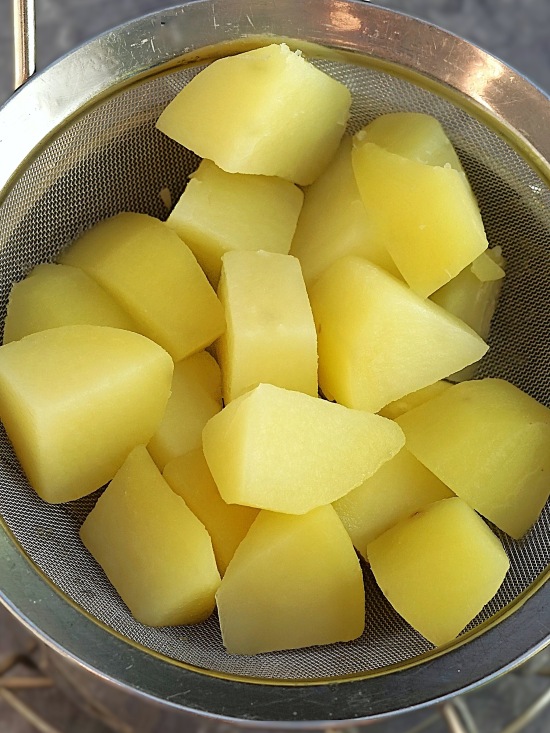
Dry potatoes
Once your potatoes are boiled (season the water with salt to taste), it’s important that they should be as dry as possible before mashing. After draining, leave them in the sieve or colander for five minutes. This allows any clinging water to evaporate.
OTHER INGREDIENTS
The only other ingredients you need are also every day, simple ones.
- FLOUR. Plain (all-purpose in the USA). Providing you’ve used floury potatoes, cooked, drained and let them dry as per the instructions in the recipe card, you should need just 50 grams of flour to make the dough for potato cakes.
- BUTTER. For the reasons mentioned, a buttery mash won’t work here. But I do like the flavour a little butter gives to potato cakes. I recommend a maximum of 30 grams while mashing, but you could reduce that further. Some people don’t add any butter to the dough, so it’s up to you.
- SALT & PEPPER.
MAKING AND SHAPING THE DOUGH
After you’ve cooked, drained, and dried the potatoes as described above, tip out any water that’s collected in the saucepan and return the potatoes to the pan. If you’re using saved cold potatoes, put them in a sturdy bowl. Add some pepper plus the butter if using and mash the potatoes until smooth. If using cold potatoes, melt the butter so you can incorporate it more easily.
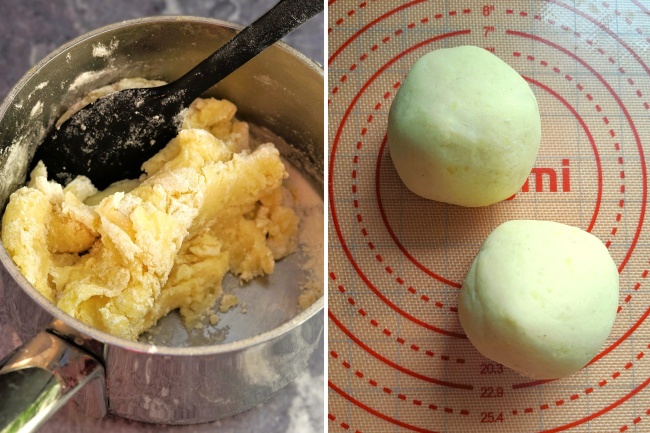
Have a taste and add more pepper and salt if you like. Now tip in the flour and stir in to create a soft dough. To get the classic triangular quarters, divide the dough in half and shape each half into a ball.
Lightly flour your work surface and roll each ball into a circle. So I don’t need to add much extra flour I first cover my work surface with a silicone mat. A mat reduces sticking and makes cleaning up easier too. I like my Potato Farls relatively thin, so make the circle roughly half a centimetre thick. Go thicker if you want, but I recommend no more than 1 centimetre.
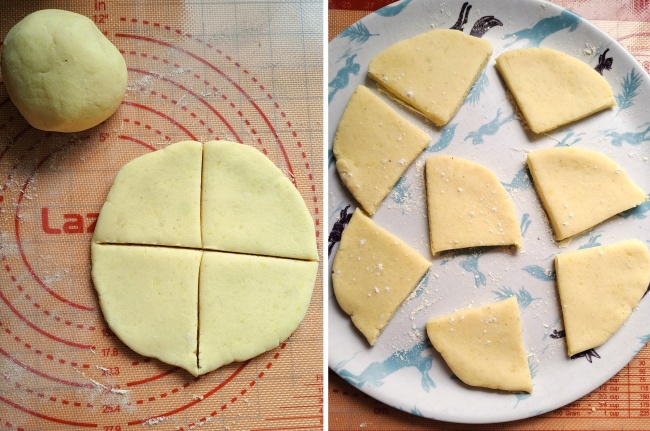
Cut each circle into quarters and you’re ready to cook. Note that if you want to prep in advance the farls can be put on a tray or board and stored in the fridge.
COOKING POTATO FARLS OR POTATO CAKES
Potato cakes are traditionally cooked on a griddle, but you can use a frying pan. I cook mine on an electric tabletop grill. As well as cooking evenly and having good temperature control, I can cook all eight farls in one go.
If your pan or griddle isn’t big enough to do this, cook in batches and keep cooked ones warm in a low oven while you finish the rest.
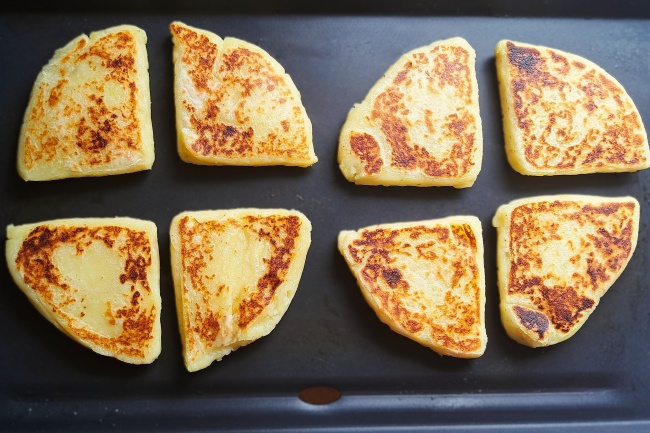
Whether you cook the farls in butter or oil, or nothing at all, is up to you. If serving with a big breakfast of sausages, bacon, etc. I use nothing as I prefer them drier. But for a simpler meal e.g. with eggs and/or baked beans, I often add a little oil or sometimes a dab of butter too. That’s the beauty of potato cakes. You can tweak them to your own tastes at every step.
Either way, the farls will only need 3 to 5 minutes per side, on medium heat. Turn when the underside is golden brown, then turn as often as you need to for even cooking. When done, they should be cooked through and slightly puffed up.
SERVING POTATO FARLS
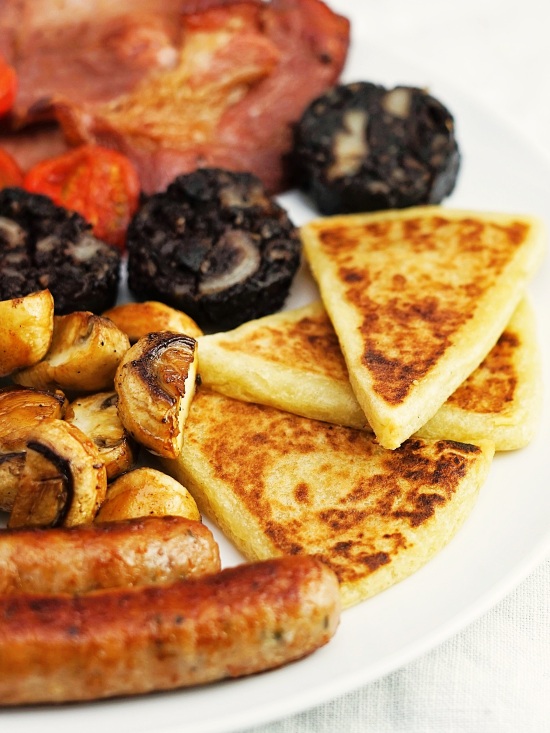
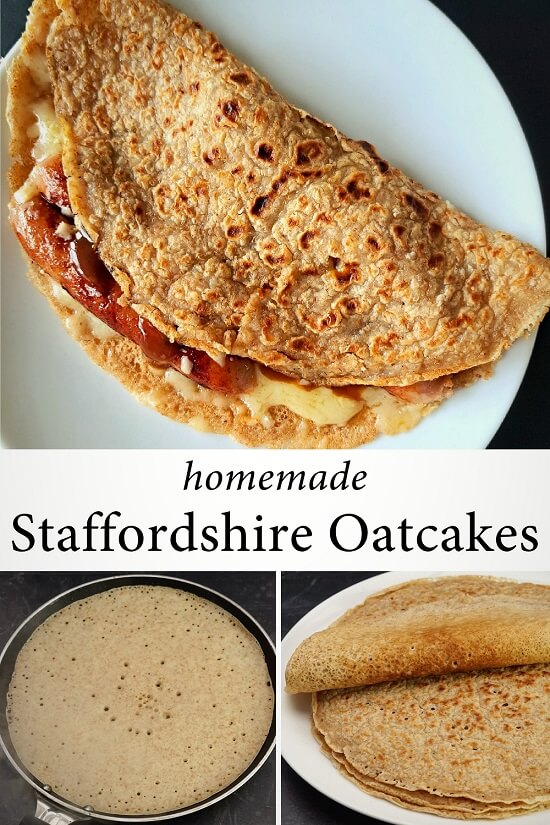
Traditionally, Potato Farls are served as part of a hearty breakfast. A great change from toast, fried bread, or Staffordshire Oatcakes, I certainly think potato cakes go well with sausages, bacon, black pudding and the whole big breakfast experience.
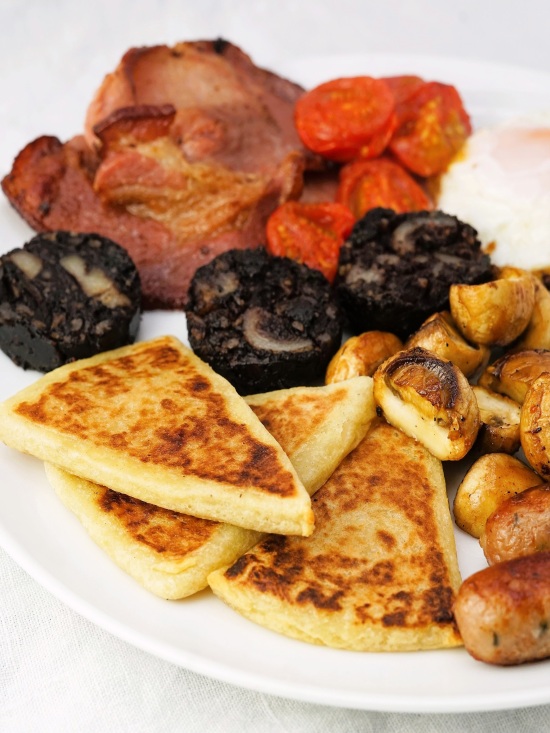
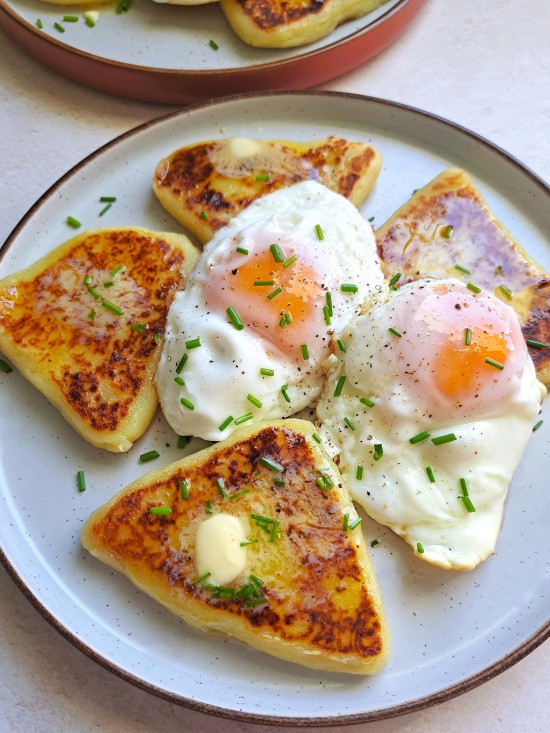
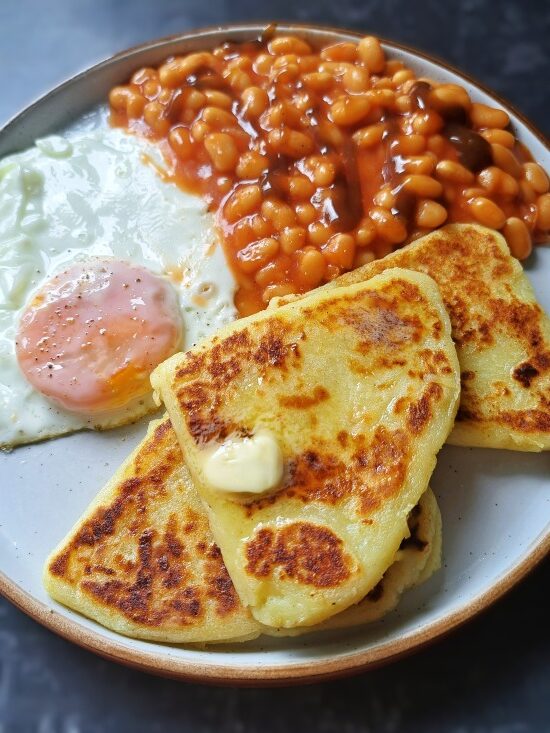
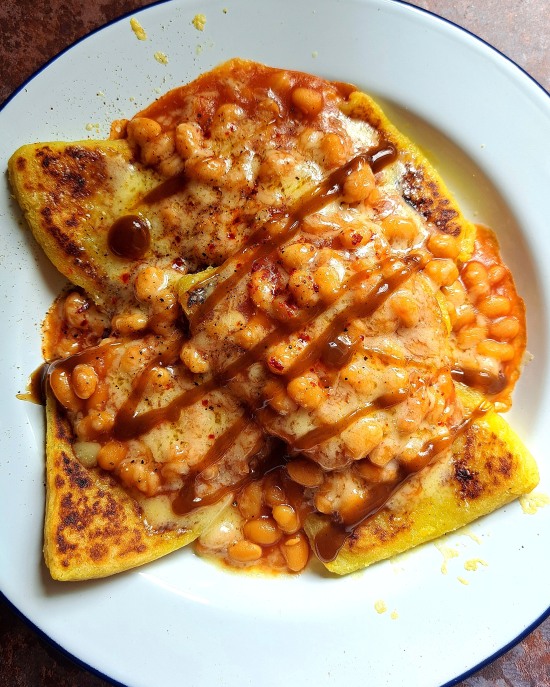
If you fancy something lighter, they’re lovely topped with fried or poached eggs, with or without baked beans. Or how about a stack of potato cakes topped with the warmed baked beans, scattered with cheese, then popped under the grill until bubbling? Finished with a squirt of brown sauce, this makes a wonderful vegetarian big breakfast.
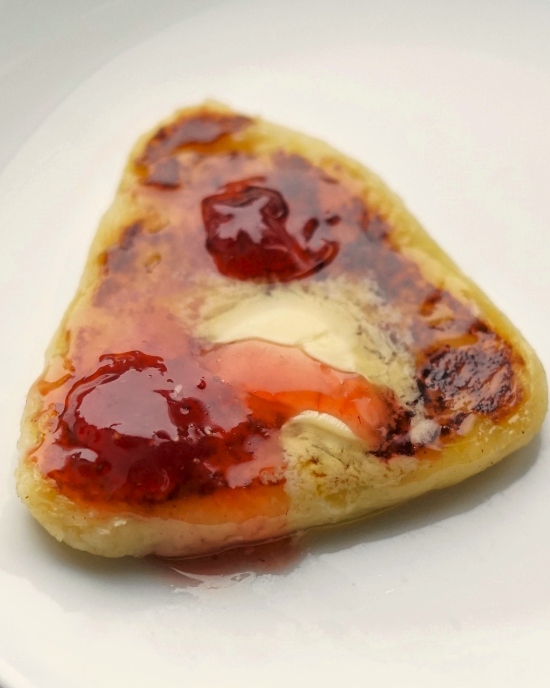
The farls reheat well, so you can make them a day or two in advance and store in the fridge (or even freeze: see FAQs). You can reheat in lots of different ways too: back on the griddle or in the pan, in a toaster, a low oven, or air fryer. And don’t forget sweet farls for breakfast or even dessert topped with butter and a blob of jam or drizzle of maple syrup.
Simple, satisfying and incredibly versatile, if potato farls, tattie scones or potato cakes are new to you, give them try and you’ll wish you’d been making them for years.
If you’ve made my recipe, I’d love to know what you thought. Please do leave a comment and rating.

POTATO FARLS/POTATO CAKES FAQs
- What’s the difference between a potato farl, potato cake, potato scone, and tattie scone? Nothing! They’re just different names for a flat cake made mainly from mashed potato. Different parts of the British Isles have different names for them.
- What do you eat potato farls with? Traditionally eaten with a big breakfast of sausages, bacon etc., but also good with eggs and/or baked beans, or even sweet toppings like jam.
- What the best type of potato for making farls? For a fluffy result only use floury potatoes (e.g. Maris Piper, Rooster). Waxy potatoes will be unpleasantly gluey when mashed.
- Can I use leftover mashed potato to make potato cakes? If your leftover mash has lots of butter, cream or milk added then it isn’t recommended. This is because you’ll have to add more flour to get the cakes to come together and this will make them heavy. Leftover mash with just a little butter might work, but to be on the safe side it’s better to cook potatoes fresh. If making a buttery mash, you can always cook extra potatoes and set aside to make farls later.
- Do I have to add butter to the dough? Some prefer to add no butter at all.
- How do I cook potato farls and potato cakes? On the griddle or in a frying pan. Some people add a little butter and/or oil when cooking, but it’s up to you. You can serve with a pat of butter on top if preferred.
- Can you freeze potato cakes? Cook then cool before freezing.
- How do I reheat farls or tattie scones? On a griddle, in a pan, in a toaster, low oven, or air fryer.
Potato Farls (Irish Potato Cakes)
Potato Farls, Irish Potato Cakes, tattie scones or potato bread (depending on which part of the British Isles you're from) are easy to make and great for breakfast or a snack. Serve with a big, cooked breakfast, eggs, beans, or cheese, or even sweet toppings like jam, plus butter melting on top.
For the best results, read the accompanying blog post and the Recipe Notes below before starting.
Ingredients
- 350 - 400 g floury potatoes e.g. Rooster, Maris Piper (weight is after peeling: please read Recipe Notes)
- salt
- pepper white or black
- 30 g butter (see Recipe Notes)
- 50 g plain flour plus extra for dusting
Instructions
-
Peel the potatoes, cut into 2cm chunks and place in a saucepan.
Cover with cold water and season with salt.
Bring to a boil, then simmer until tender (12-15 min).
-
Drain the potatoes in a sieve or colander.
Rest the sieve or colander on the now empty saucepan and leave the potatoes to dry and cool for 5 minutes.
-
Tip out any water that's collected in the saucepan and return the potatoes to the pan.
Add some pepper, the butter, and mash until smooth.
Taste and add a little more seasoning if needed.
Mix in the flour to give a soft dough. To make the classic triangular quarters, divide the dough in half and shape each half into a ball.
-
Sprinkle your work surface with a little flour (ideally, first cover with a silicone mat to reduce sticking) then roll or pat each ball into a circle ½ - 1 cm thick.
Cut each circle into 4.
-
Heat a non-stick griddle or frying pan to medium, then transfer as many potato farls as will fit in without crowding them. Optional: grease with a little butter or oil first.
Cook the farls in batches if necessary, transferring them to a preheated baking tray in a low oven while you cook the rest.
-
Cook until brown on both sides and heated all the way through.
This should take 3-5 minutes per side and they'll puff up a little when done.
-
Serve with eggs, beans, bacon, sausages etc., buttered if liked, or with sweet toppings such as maple syrup or jam.
Can be stored for 2-3 days or frozen (defrost before reheating). Reheat on a griddle, in a pan, toaster, low oven or air fryer.
Recipe Notes
Peeled/unpeeled potatoes. If you prefer to peel your potatoes after cooking, start with a larger amount of potatoes so you end up with 350 – 400g. If you prefer to make farls with unpeeled potatoes scrub well before cooking.
Leftover mashed potatoes. While you can make farls with leftover mashed potatoes, this isn’t recommended if they contain more than a small of butter or any milk/cream. You would need to add more flour to get them to hold together, resulting in a heavy, gluey farl.
Butter. Some prefer no butter in their potato cakes. The amount can also be reduced if preferred. If using cold, previously boiled potatoes melt the butter before mashing to incorporate more easily.
This post is a completely rewritten version of one first published in 2020 with mainly new images plus a FAQ section in response to reader comments and queries.
RELATED RECIPES
These farls are exactly like my Irish Grandmothers and are delicious served with left over Sunday roast. She always made extra mashed potato’s for Sunday’s afternoon dinner and supper that evening was always something to look forward to. One additional ingredient she always added was caraway seeds which added a very pleasant herb flavor somewhat like green onion would. My Grandmother hailed from Roscommon, Ireland and emigrated to the USA during the potato famine and resided in Connecticut until her passing. Many fond memories, especially her potato farls (potato cakes).
Thank you for your lovely comment and 5-star rating, Ken! Some very interesting history you’ve shared there, and I love the sound of farls with leftover Sunday roast. Thanks so much for getting in touch!
My mother made these all the time. They were always eaten voraciously and enjoyed immensely especially when they were part of a beautiful Irish breakfast. But those days are long gone,, my mother died about 30 years ago and I’ve been living in Canada for more than that. But it never ceases to amaze me that these recipes are still shown on north American recipe and I’m still grateful that they are because I mean to make them one day.
Thanks so much for getting in touch with your story, Anna. I’m trying to make farls more popular again here in England where the hash brown seems to have nudged them out.
I was only looking out of curiosity really, as I have been making potato cakes for years, and actually made a batch last night, and I am astonished at the number of weird and wonderful recipes out there online containing all manner of spurious ingredients (so many with eggs and even milk in them for goodness sake!) I’m delighted to see someone doing it right, with just potatoes, flour, a touch of butter and some salt and pepper.
I make mine in circles marked out into quarters and cook in a round cast iron skillet.
They freeze really well and can be reheated quickly in the toaster, under the grill, or even in the air fryer, so I tend to make a big batch when I find some time on my hands or have a surfeit of awkwardly shaped potatoes..
Thank you, Nigel. Good to get such praise from an old hand at making potato cakes!
‘Potato cakes’ were one of my Welsh mother’s comfort food goodie…guaranteed cure for the Winter blues. She made them pretty thin, then cooked them on a dry griddle sprinkled with a little salt (a heavy circle of iron almost half an inch thick). When ready they were sliced through the middle and reassembled, sandwiched liberally with cold butter and sprinkled with salt. A tea towel tucked into the collar was the required dress when eating them as the butter leaked as it melted.
I hate to admit that I have made potato cakes using (dare I say it? 0 Instant mash! Using slightly less liquid than advised on the packet to get a drier mash…it worked, with the addition if butter, salt and pepper, and on one occasion finely chopped spring onions. I do usually make my own mash with steamed potatoes…I’m not a total Philistine!…but the cheats version works and might be useful for camping cooks.
Thanks so much for getting in touch with your interesting comment, Lori. I love the idea of a tea towel in the collar to catch the drips of melted butter! 😋😋
“Some people fry them in fat, but I think that’s unnecessary.” This is the main place I parted ways. Most recipes call for frying in butter and that’s how I’ve had them. On a dry non-stick cooking surface, I get a naan-like pattern of blackened spots in a network of white, unbrowned dough exactly where the farl contacts the surface, without any fat to distribute the heat evenly. Great for naan not so great for farls. Frying in butter improves the appearance, texture and flavor. I’m not making these for my health. 🙂
Yes, I can certainly see the attraction of frying them in butter! I will almost always eat them with some sort of fatty food or top with a pat of butter 😋.
Just made these for my mashed potato hating son. He absolutely loved them. So simple, although I didn’t tell him that! Thank you for the recipe
Ha ha! How sneaky of you! 😄. Glad they were enjoyed.
I rated 5 star –
Because I know if I make them right they will be tasty as –
I love these haven’t had them in centuries:
Once you eaten them – you never forget how tasty they are ,
Thanks for the recipe – exactly what I was looking for .
How about
Good old English
Folly Polly recipe : Sweet one
I’ve just made these and they’re delicious and without the gloopy feel I usually end up with – thank you for all the hints and tips, as well as the recipe!
Thank you, Frances! Gloopy potato cakes are such a let-down, so I’m pleased you found my version delicious 😊
Perfect potato cakes! Advice to first timers – use floury potatoes. Any old potato won’t do. Only add the amount of butter in the recipe and less if you’ve used left over mashed potato. Dry fry in a non-stick pan, slowly so they cook all the way through without burning. Once cooked you can now slather on as much butter as you like! I’m keeping mine in the fridge to take to the Forest tomorrow and heat up on an iron griddle over the camp fire. What a feast it will be. 😋
Thank you for your lovely feedback and excellent tips, Carolyn! Eating these over a camp fire sounds wonderful!
I have just tried the recipe and I’m not impressed. They’re not like any potato cakes/farls that I’ve tasted. They are better if there is no butter added when mashing the potatoes and quite a lot more flour is required. The recipe gives a dough that is too soft and sticky so difficult to cook and a bit “mushy” when eaten.
Sorry to hear that Joe. From previous comments, others who’ve made the recipe have enjoyed them (and even compared them favourably to their grandmother’s).
No one else has mentioned having to add more flour or finding the dough difficult. I wonder if your measurements could be off? Other possibilities are that you’re not using a floury potato, you cooked the potatoes too long, or didn’t leave them to dry off after draining.
Can you freeze them once made? They look just like mammy used make x
UPDATE: Yes, you can freeze them! See Nigel’s comment 29/03/2025.
Although I haven’t tried it, I can’t see any reason why you can’t freeze the farls. Hope you enjoy them!
These are very good indeed not as good as my grannies but very good indeed
‘Very good indeed’ is praise enough for me, even if your grannies’ are better, so thank you!
I’m going to give you a five based on the convincing description and excellent photos. I will have a crack at the farls today and report back ASAP.
I was brought up in Ireland eating potato farls (where they’re very popular) from home bakeries and my granny’s kitchen and your methods seem consistent with their approach.
One last observation – my son has started an etymological debate with me about the origin of the word farl – it was what we always knew these as in Ireland however he has pointed out that it’s from the Old English for quarter. Other contributions to that debate welcome!
Very good site – thank you
Ah yes! I’ve just seen that farl is related to Old English (also the Middle English ferdell) but I guess it’s understandable that such closely related countries might have similar words for things.
Hope you enjoy them!
WHY? WHY? WHY? Do all recipes for mash potatoes, potato cakes, roast potatoes etc ask one to boil the potatoes in plenty of water and then drain off the water?
Aren’t the valuable nutrients drained off too? Why ever not boil potatoes in their skins and peel after boiling? This helps to retain the minerals and nutrients. Ask any sensible nutritionist or just use your own common sense. B and C vitamins are water soluble so all vegetables need thorough washing before peeling and cutting. This has been driving me crazy for ages.
If someone’s diet is so deficient in vitamins that those found in potato cooking water are going to make all the difference, I’d suggest they seriously need to reassess their diet.
But each to their own, and thank you for the 4-star rating… despite me peeling the potatoes! 😁
I made these after trying several different recipes, including my grandmother’s. These simple ingredients worked so much better and resulted in nice fluffy, light cakes where others were heavy and overly seasoned.
I do boil the taters in the skin, but that’s because I think it’s easier to peel the skin off after boiling and you loose less of the potato. To each his own. I’m sure the nutrient difference is negligible.
Happy to give you 5 stars, and by goodness, don’t tell my grandma that your’s are better or she’ll be rolling in the grave.
Thank you for your lovely feedback, Amanda!
Very honoured that my recipe is your favourite from those you’ve tried – even your grandmother’s 😊.
I agree that boiling the potatoes in the skins is a personal choice, although probaby best done for the reason you did rather than for any small nutritional benefit.
Thanks again for taking the time to give your feedback!
I always boil my potatoes without peeling until cooked – much nicer xxx