Cheesy Scottish Oatcakes
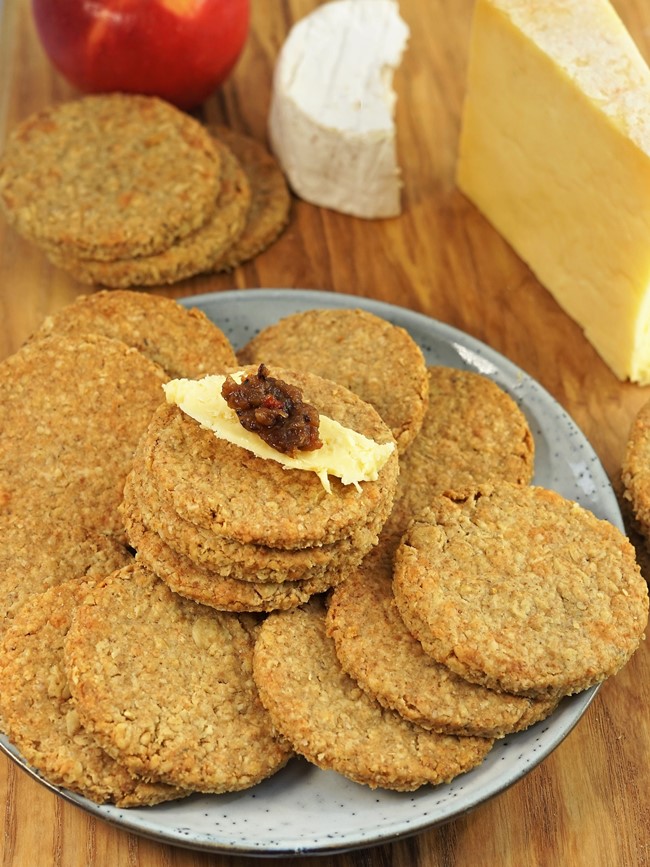
Cheesy Scottish Oatcakes are easy to make with simple ingredients. But they’re wickedly good! Adding mature Cheddar cheese to the traditional savoury biscuit or cracker takes them to whole new level. Enjoy as part of a cheeseboard, with spreads and dips or even instead of bread alongside salads and soups. But I think they’re tasty enough as a snack or nibble all on their own.
Disclosure: this post may contain affiliate links. If you buy via my links, I may earn a small commission at no extra cost to you.
This is an updated version of a post first published in 2021.
Jump to Recipe
WHEN IS A CHEESY OATCAKE NOT A CHEESY SCOTTISH OATCAKE?
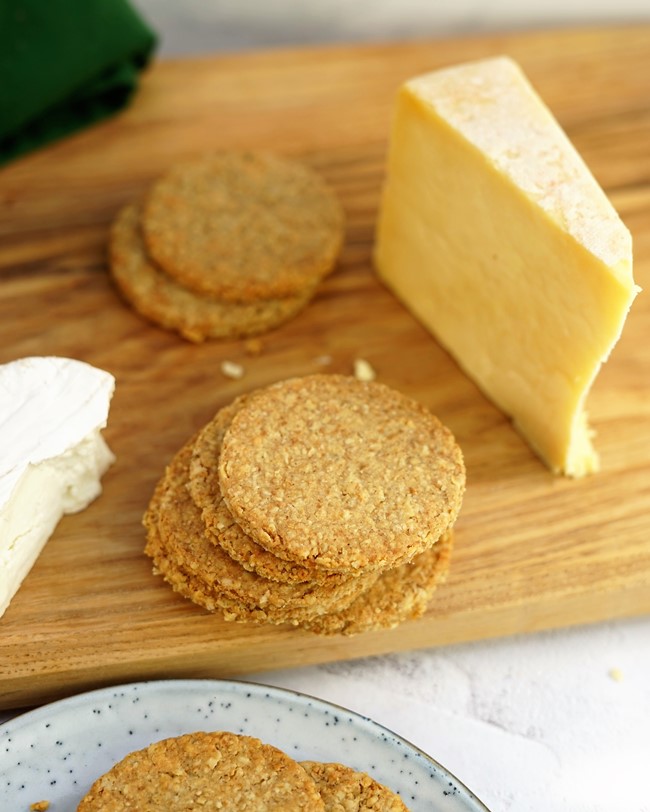
How do you make cheese and biscuits even cheesier? By adding cheese to the biscuits, of course! In this case I mean Scottish Oatcakes which are a simple but delicious type of biscuit or cracker.
However, despite not being Scottish myself, I really do have to call these delights cheesy Scottish oatcakes. That’s because here in north Staffordshire, the word oatcake doesn’t mean biscuit or cracker at all. Staffordshire Oatcakes are yeasted pancakes often eaten for breakfast stuffed with bacon or sausage plus cheese.
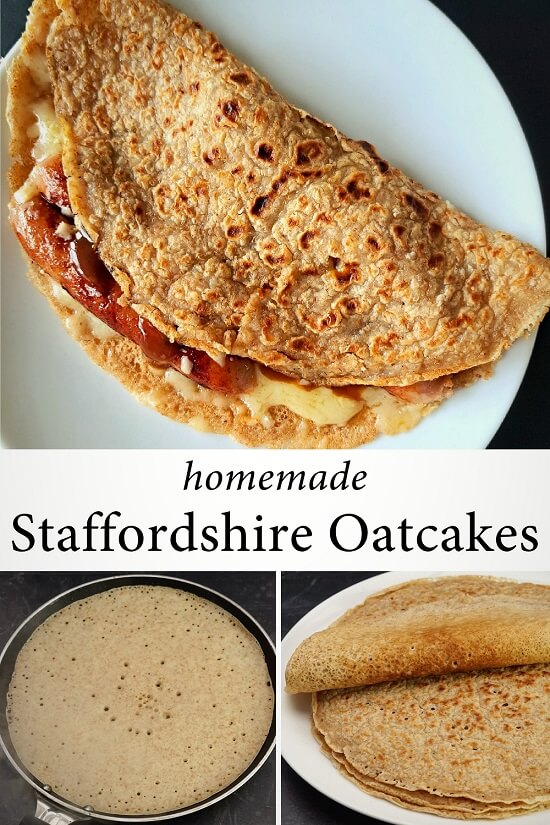
A local delicacy, to us they’re just ‘oatcakes’, hence my need to specify the current recipe as Scottish oatcakes. Is that clear? Okay, now we can talk oats.
OATS & OATMEAL
One thing I discovered after posting my recipes for Homemade Digestive Biscuits and my classic Scottish Oatcakes is that many people find oats, oatmeal and all their various guises really confusing. It’s particularly baffling for Brits looking at US recipes to read that ‘oatmeal’ is what we call porridge.
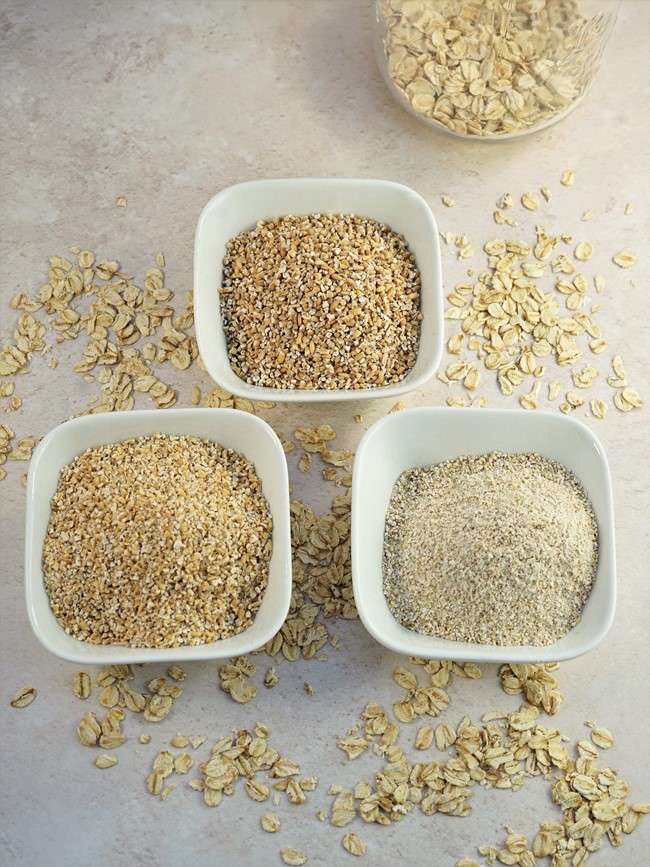
However, here in the UK oatmeal simply means a flour that’s made from oats. It’s usually sold as fine, medium or coarse. You can see examples of all three in the image above, along with rolled oats scattered about. You’re unlikely to find the different grades of oatmeal in supermarkets, but independent stores like my local wholefood shop sells all three. You’ll also find them online. But the good news is you can easily make your own oatmeal.
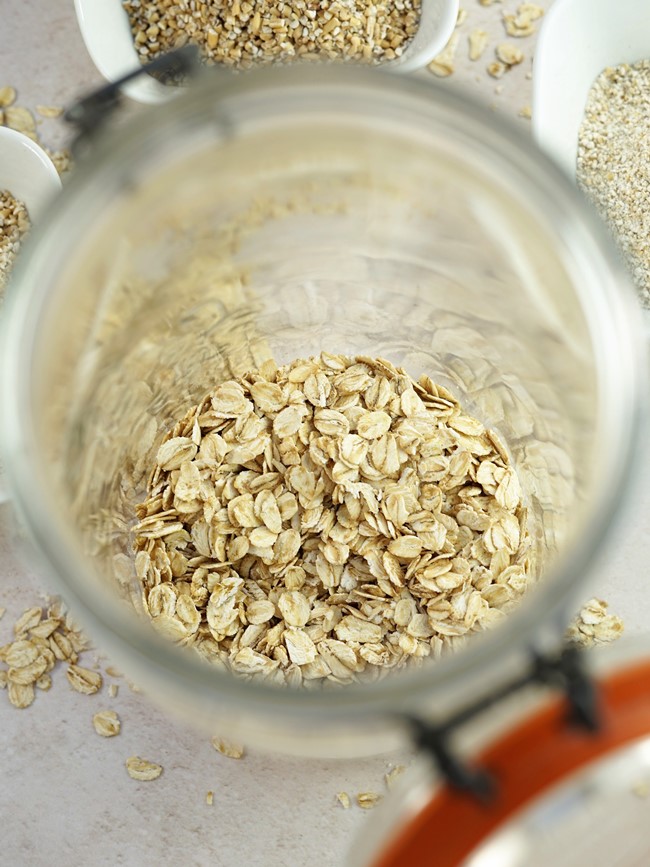
Simply whizz up in a blender or food processor rolled oats (sometimes labelled jumbo oats) or porridge oats. Grind them up until you get the fineness you like. Coarse, medium or fine, or any combination of these, will all work in Scottish oatcakes.
EASY CHEESY SCOTTISH OATCAKES
For something with such simple ingredients and so easy to make, Cheesy Scottish Oatcakes are wickedly good. You’ll find a recipe card at the end with ingredient amounts and full instructions. But I recommend you read on for extra tips and images to guide you.
You start by putting in a bowl equal amounts of rolled oats and oatmeal (or ground up oats, as above), plus mature Cheddar cheese and some salt and pepper.
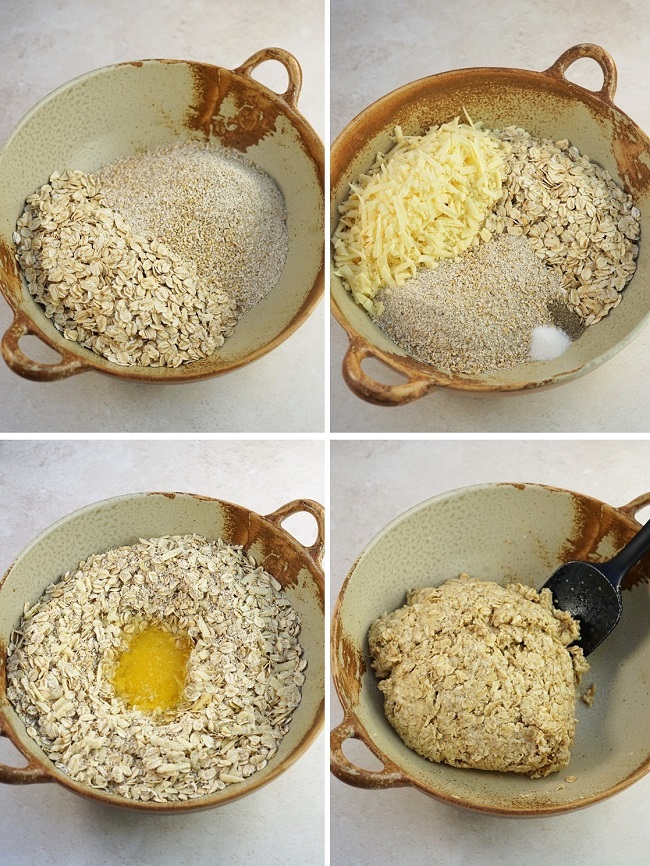
To bring the dough together, stir in two wet ingredients: melted butter and boiling water from a kettle.
Then it’s just a case of rolling the dough and stamping out oatcakes with a cutter. I prefer to roll out on wholemeal flour as it’s less sticky. But use more oatmeal instead if you like. I also recommend you cover your work surface with a silicone mat (affiliate link) as this helps reduce sticking too.
If you find the dough comes apart at the edges as you roll, use your hands to push it together and keep going. If it seems crumbly, sprinkle over a little water; cold rather than boiling is fine at this stage.
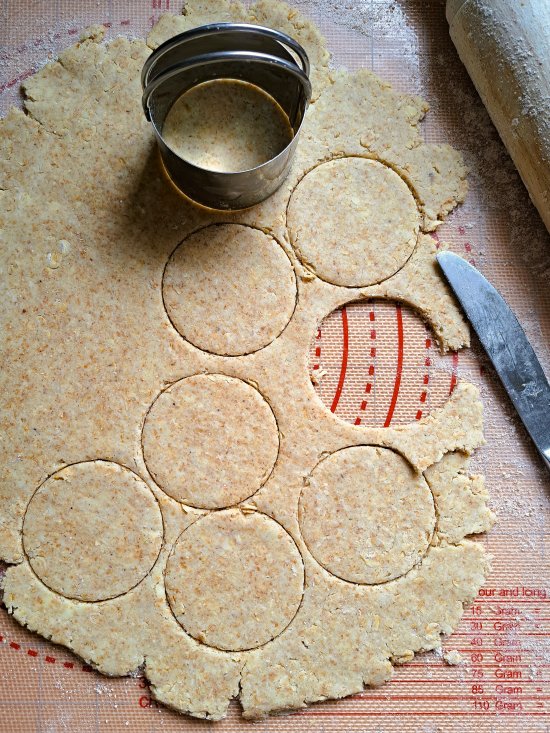
In my classic Scottish Oatcake recipe, I suggested you roll the dough 3-5 mm thick. But for this cheesy version I recommend you stick to the thinner end of the range. The reason is I find the toasty, cheesy flavour is enhanced in the thinner oatcakes. And that’s got to be a good thing, hasn’t it?
As you cut them out, place on baking trays you’ve either greased with extra butter or lined with baking parchment.
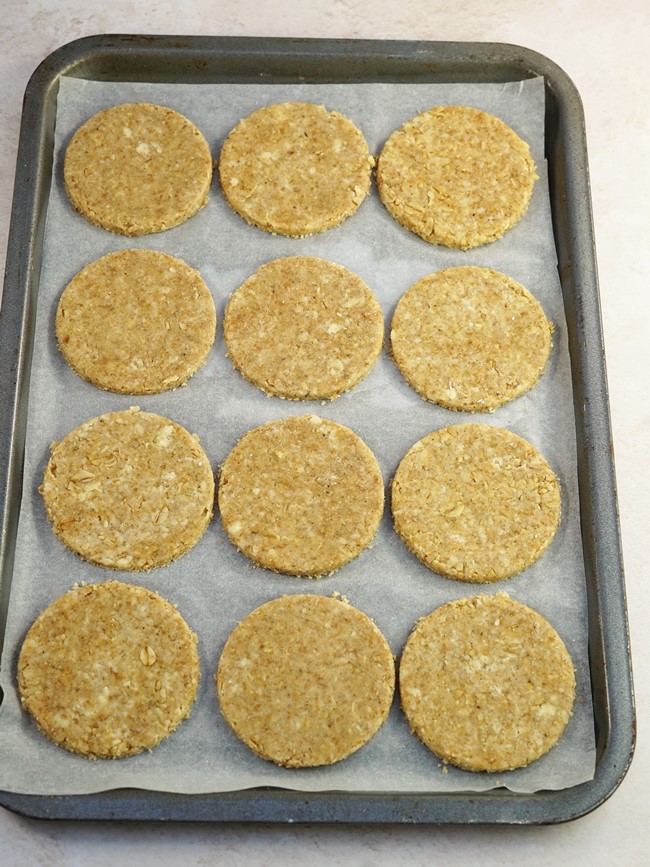
Once you’ve stamped out the first batch, bring together the scraps and make more oatcakes. It’s worth noting that oats can be quite ‘thirsty’. This means that as you re-roll you may need to add a drop more water to the dough to stop it going crumbly.
Rolling the dough roughly 3 mm deep and using a 6 – 7 cm cutter should give you at least 24 oatcakes.
BAKING & STORING
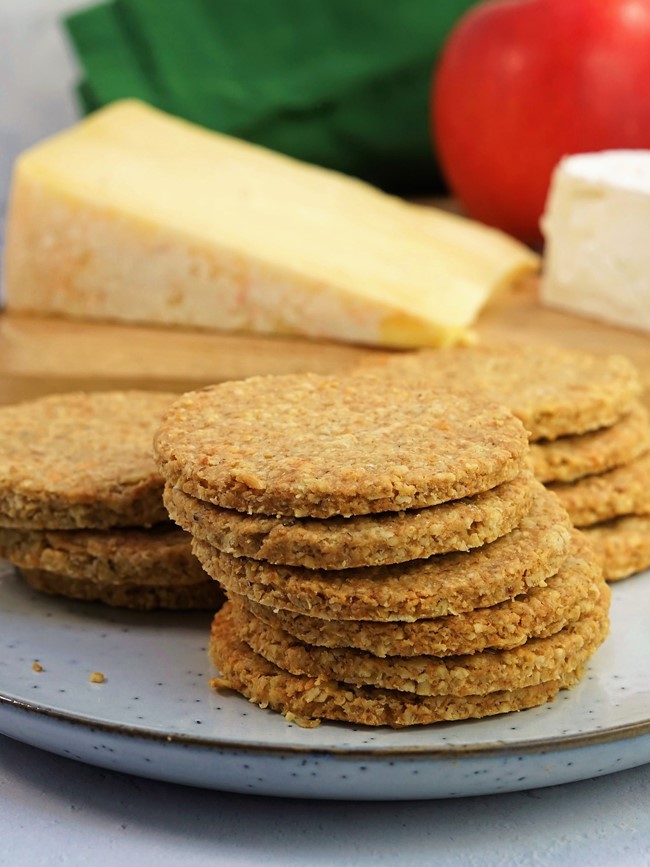
Unless you’ve rolled the dough thickly, the oatcakes should be golden and baked all the way through in 25 – 30 minutes. I’ve given the oven temperature in the recipe card, but ovens due vary. So I suggest you check after 15 minutes and turn the temperature down if the oatcakes are browning too quickly. For even baking you can also turn them over for the final few minutes.
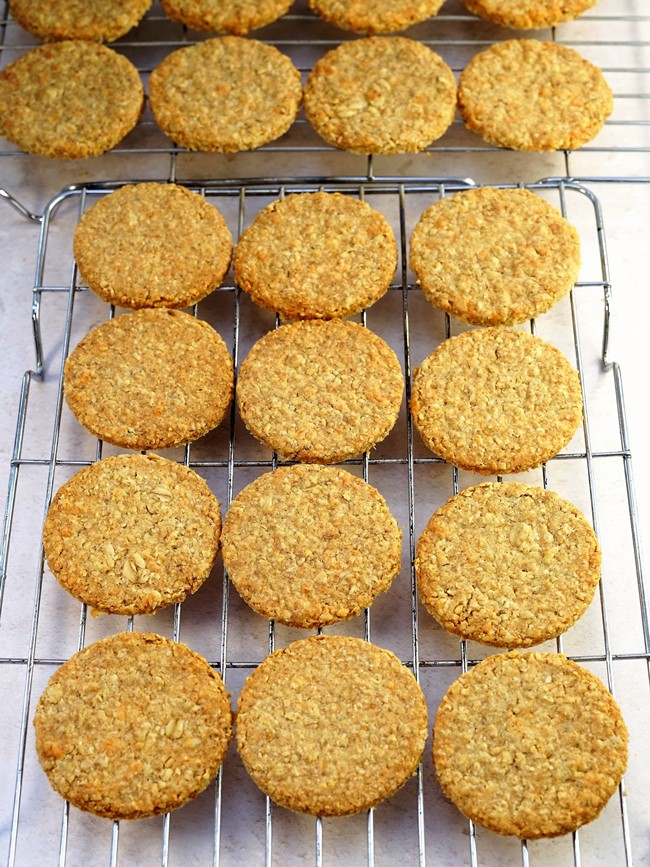
Then it’s onto a wire rack to cool. Of course, the cook is allowed to sample one (merely for quality control, you understand 😁) as soon as they can be safely handled.
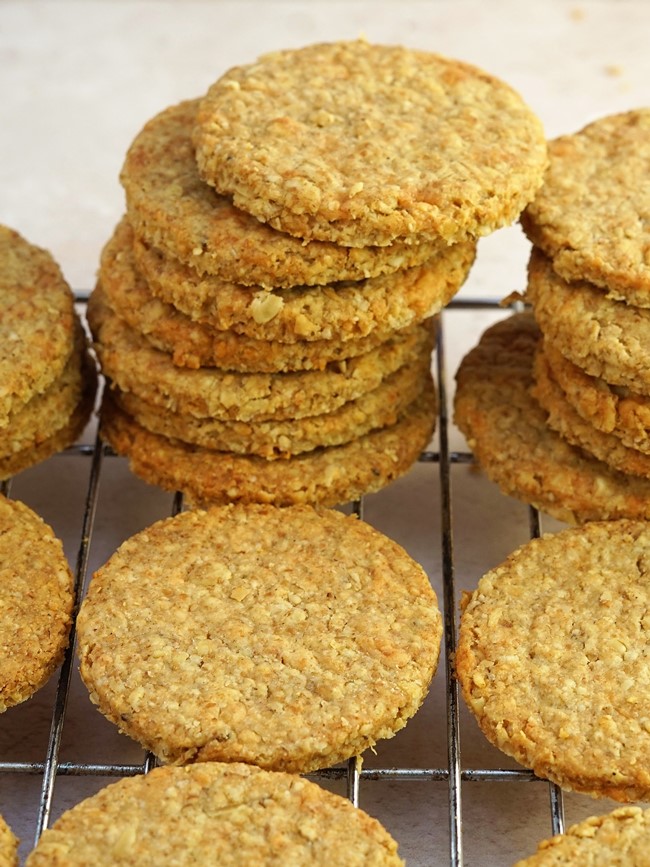
Once completely cold, the oatcakes can be stored in an airtight container where they’ll keep for a month. If you can resist that long.
SERVING CHEESY SCOTTISH OATCAKES
You don’t need me to tell you that savoury biscuits and crackers go wonderfully well with cheese. Maybe topped with a bit of homemade chutney too.
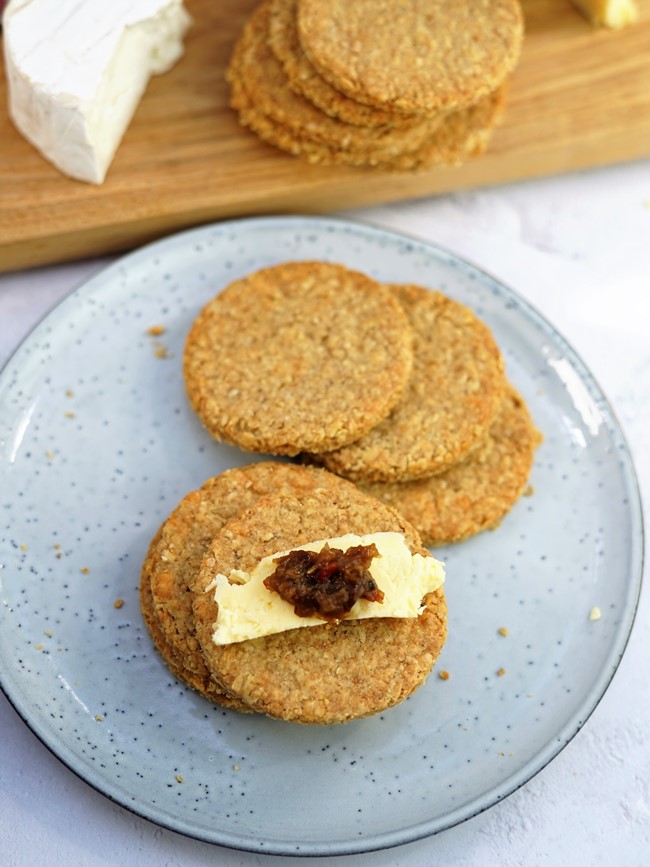
I love the rough, rustic nature of these oatcakes which complement beautifully both smooth, creamy cheeses and tangy, crumbly ones. But oatcakes aren’t just for a cheeseboard. Traditionally a major source of carbohydrate, they would be served with all sorts of meals. Try them instead of bread or toast at breakfast or alongside soups.
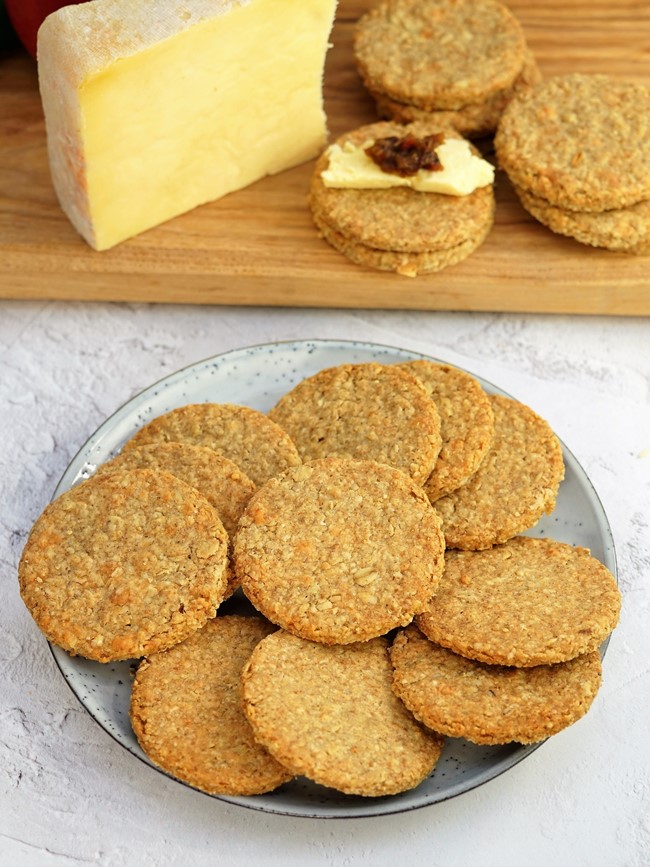
And the really great thing about Cheesy Scottish Oatcakes is that, so tasty, they can be eaten with no embellishments at all.
Full of toasty, cheese flavour, you can eat them as a snack or nibble just as they are. Maybe pack a couple (or more!) in work and school lunchboxes for a treat. Made from wholesome, real foods, they’re a million miles from the ultra-processed crisps, crackers and savoury nibbles packing the supermarket shelves.
Give my Cheesy Scottish Oatcakes a try and I think you’ll be surprised at just how good something this easy can be be.
HAVE YOU MADE THIS RECIPE? PLEASE LEAVE A COMMENT & RATING
MORE SCOTTISH OATCAKE RECIPES
Cheesy Scottish Oatcakes
Easy to make and with simple ingredients this cheesy take on a traditional savoury biscuit or cracker is wickedly good! Enjoy as part of a cheeseboard, at any time instead of bread, or as snack just as they are.
Please read the accompanying blog post before starting and use metric measurements.
Ingredients
- 140 g rolled oats or porridge oats
- 140 g oatmeal (fine, medium or coarse) or oat flour (see Recipe Notes for making your own from rolled or porridge oats)
- 100 g mature Cheddar cheese (grated)
- ¾ tsp salt
- ¼ tsp black pepper
- 75 g butter (melted: plus extra for greasing)
- 100 - 120 ml boiling water from a kettle
- wholemeal flour for rolling out (can use oatmeal instead, but wholemeal flour is less sticky)
Instructions
-
Preheat the oven to 180°C /160° Fan/Gas 4 /350°F.
-
Lightly grease 2 baking trays with butter or line with baking paper.
-
Put in a mixing bowl the oats, oatmeal, cheese, salt and pepper, then stir together.
Make a well in the centre and pour in the melted butter plus 100 ml of boiling water.
Stir quickly to bring the mixture together into a firm dough. Add a little more boiling water if the mixture looks at all crumbly.
-
Dust your worksurface, ideally covered with a silicone mat to reduce sticking, with wholemeal flour then transfer the dough onto it.
Sprinkle the dough and a rolling pin with oatmeal and roll out approximately 3 mm thick.
Tip 1. If the dough starts to come apart at the edges, just push it back together with your hands.
Tip 2. If it seems at all crumbly sprinkle with a little water (cold rather than boiling is ok at this stage).
-
Stamp out oatcakes using a 6 - 7 cm round cutter. Use a round bladed knife to help you lift and transfer them to the baking trays.
Bring together the scraps and re-roll to make more oatcakes until all the dough is used up.
Tip: oat dough can be very 'thirsty': so you will likely need to add a little more water when bringing together the scraps, and especially if you added a lot of flour when rolling out.
-
Put the trays in the preheated oven and bake until golden and cooked all the way through: approximately 25 - 30 minutes.
Check after 15 minutes that the oatcakes aren't browning too quickly before they're cooked: reduce the temperature if necessary.
Tip: for even baking, you may wish to turn the oatcakes over for the final 5 minutes or so.
-
Transfer the baked oatcakes to a wire rack to cool.
When completely cold, store in an airtight container.
Should keep at least a month.
Recipe Notes
Make your own oatmeal. If you don't have oatmeal or oat flour, make your own by whizzing rolled oats or porridge oats in a food processor, blender or coffee mill. Whizz briefly for coarser oatmeal, longer for fine.
Rolling the dough. Wholemeal flour is less sticky than oatmeal and makes rolling out easier, but use extra oatmeal if you prefer.


These oatcakes are easy to make, delicious, nutritious, low sugar, low GI and honestly completely divine. You suggest putting one or two in a lunchbox. How about 6? I have made them for a dairy free gluten free friend who now makes them more often than I do. They keep well too. If you don’t eat them straight away. Brilliant!
Thanks so much Claire! I have to admit that eating 6 of them rather than 1 or 2 is a bit more realistic for me as well 😉
Delicious!!! Easy to make … I just LOVE your recipes!!!
Thank you 😊