Rustic Bread Rolls
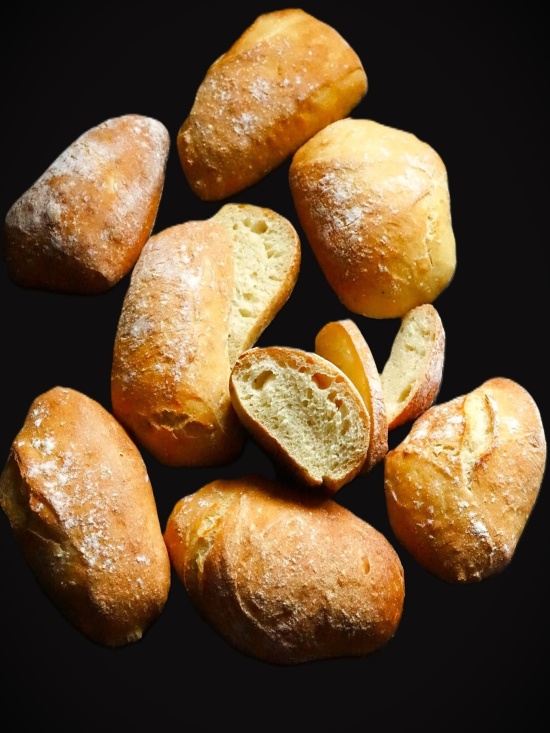
Rustic Bread Rolls, freshly baked, have a wonderfully crispy crust and chewy, substantial interior. Made with a fuss-free method, the simple no-knead dough is fermented overnight for great flavour. With next to no shaping required, the rolls have an attractive rustic appearance.
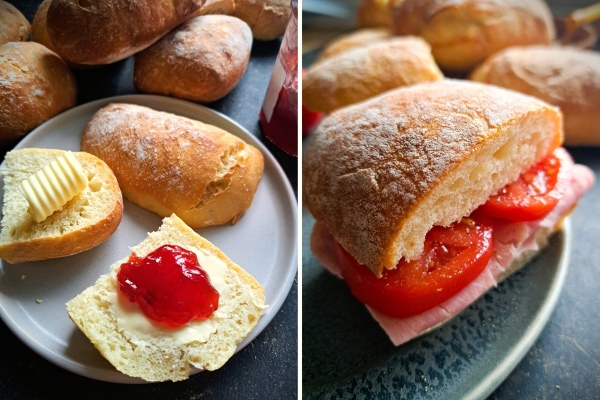
Wonderful with jam or honey, or part of a continental breakfast with eggs, meats, and cheeses, great as a side to soups and salads, or stuffed with your favourite sandwich fillings.
Disclosure: this post may contain affiliate links. Buy via these and I may earn a small commission at no extra cost to you.
Jump to Recipe
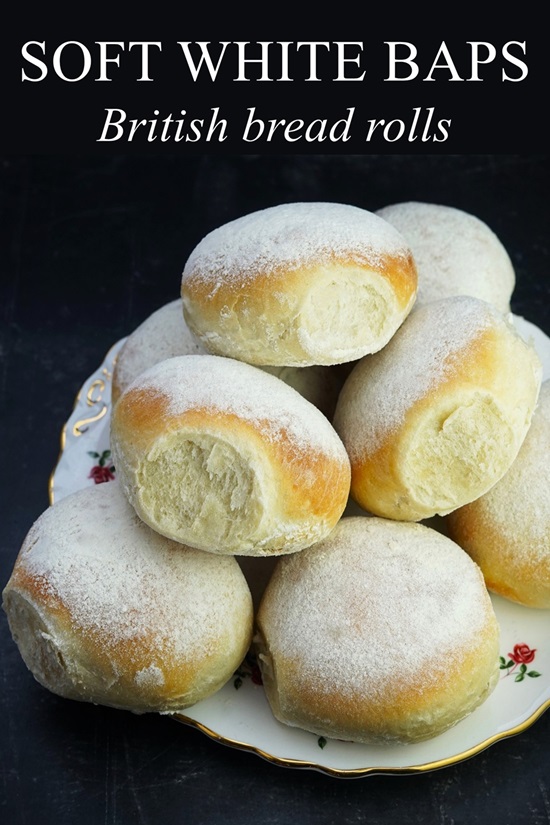
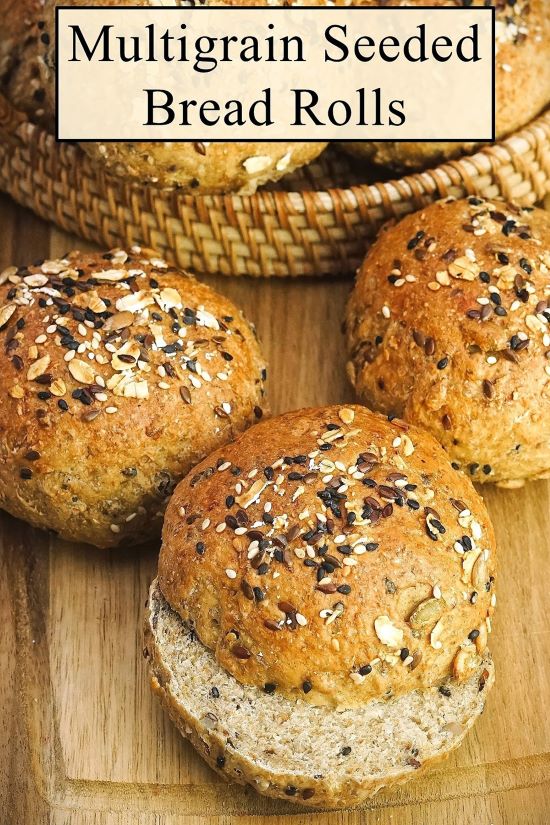
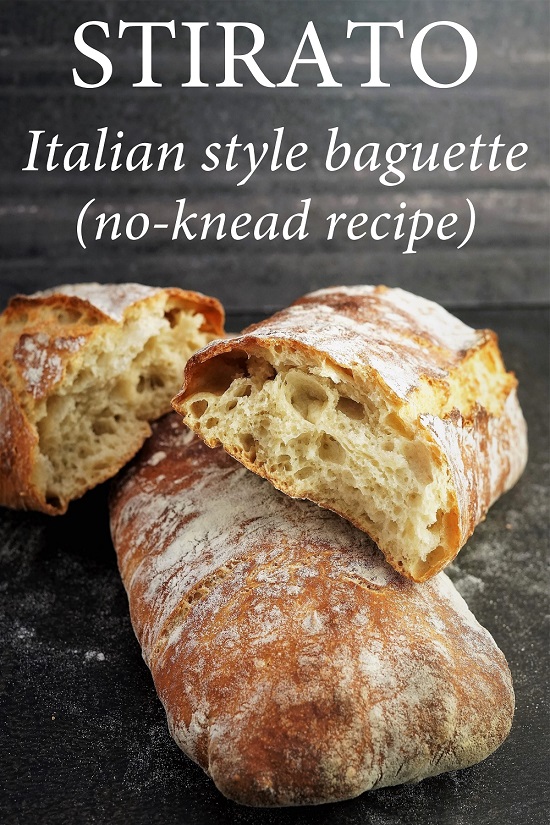
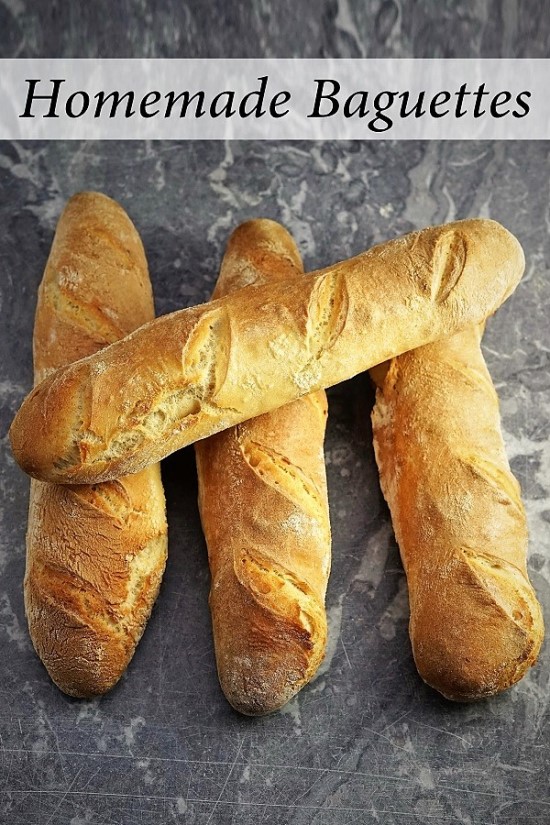
I’m always amazed at the different types of bread roll you can make with the same basic ingredients of flour, salt, yeast, and water. Slightly change the proportions, form into rounds or long rolls, adjust the cooking temperature, and you have a whole range of breads. Soft baps, French-style baguettes, crusty Italian breads, and nutritious multigrain rolls are just some of those I’ve posted.
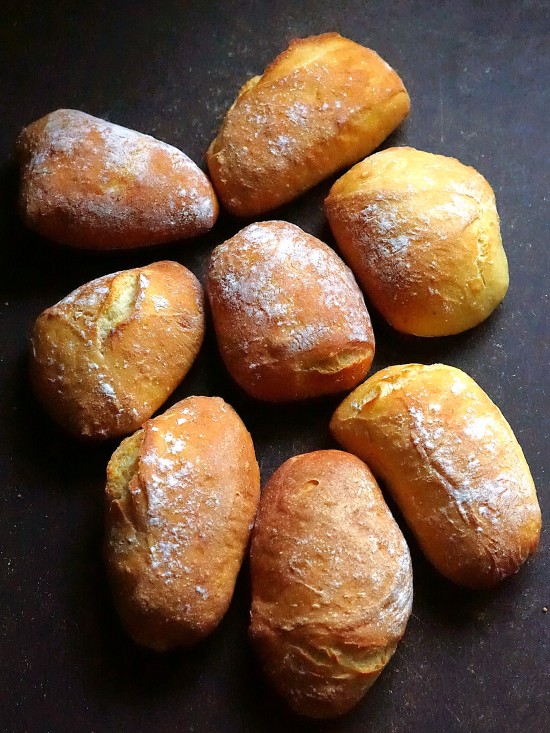
And my current favourites are these easy Rustic Bread Rolls with a wonderfully crispy crust and chewy, substantial interior.
RUSTIC BREAD ROLLS
I call them rustic because, unlike many bread rolls where careful shaping is an important part of the process, these are charmingly irregular. You just pat the fermented dough into a rough rectangle then cut into 8 pieces. Transferred to a baking tray to prove, I gently nudge into slighter neater shapes. But you can even omit that and leave completely freeform if you like. After proving, the rolls should take no more than 25 minutes to bake to a lovely golden brown.
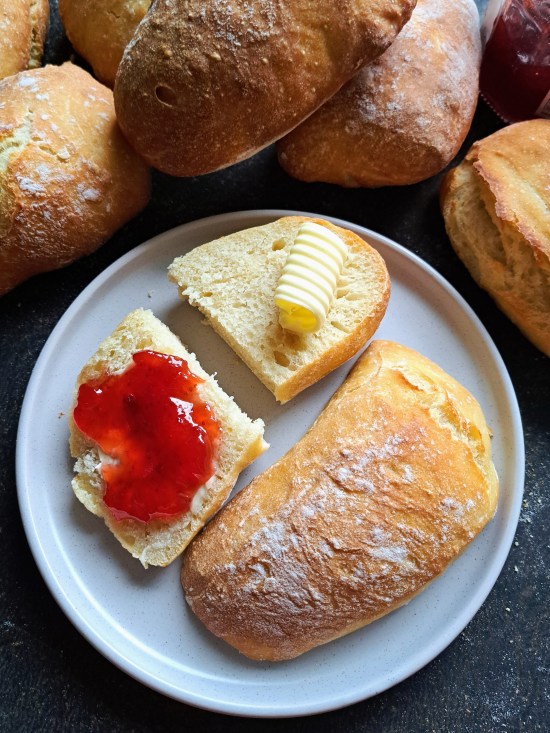
I love fresh Rustic Bread Rolls for breakfast with butter, jam or honey, or continental style with cured meats and cheeses. Like any other bread roll though, they’re perfect with soups and salads or stuffed with your favourite sandwich fillings.

And the really great news? Versatile, delicious Rustic Bread Rolls are made with an overnight, no-knead dough you can stir up in around 5 minutes.
NO-KNEAD RUSTIC BREAD ROLLS
Many years ago, I discovered that a wetter dough plus long fermentation (sometimes call first proof or prove) can replace the kneading of conventional bread making. Together, these promote the development of gluten which is normally achieved by kneading. And it’s gluten that gives bread its rise and structure.
When I say long fermentation, I mean 12 – 14 hours at normal room temperature. So, it’s usually convenient to mix the dough in the evening then shape, second prove and bake the next day. But the method is very forgiving, adaptable to your own routine. For example, if you’ll be busy in the morning, slow down fermentation by popping the dough in the fridge. It will happily sit there until you’re ready to deal with it in the evening.
Besides the usual kitchen paraphernalia of mixing bowls, jugs, spoons, baking trays, digital scales etc. there’s two simple things I recommend for all kinds of baking, especially when working with wetter doughs (although you can certainly make Rustic Bread Rolls without them).
- Silicone mat. Cover your work surface with one of these to reduce sticking and the need for extra flour. They also make clean-up easier.
- Dough scraper. Useful for removing wet doughs from bowls, for folding, cutting and shaping. Note that you often get one free with the silicone mat I’ve linked to but do check the current listing.
HOW TO MAKE RUSTIC BREAD ROLLS
You’ll find full instructions and ingredient amounts in the recipe card at the end. But I recommend you read the whole of this post first for extra tips and step-by-step images to guide you.
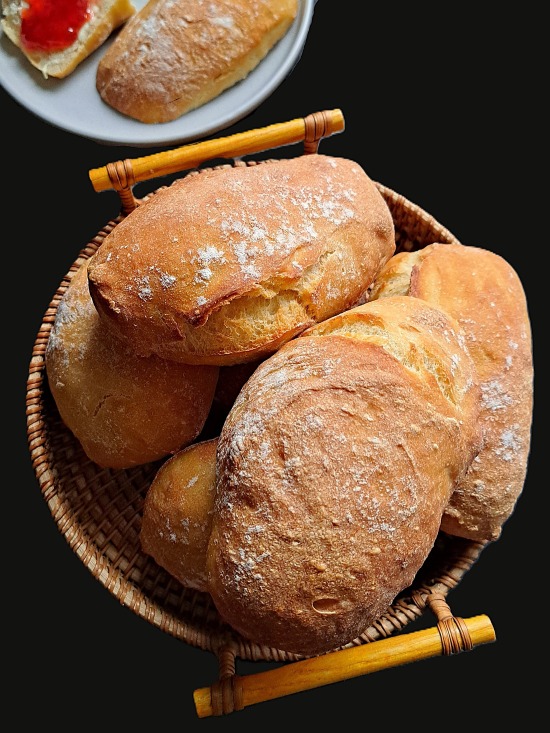
You can make Rustic Bread Rolls with just strong white bread flour. You could though swap up to half with other kinds of flour such as wholemeal bread flour. I also love them with half fine semolina, or malthouse flour plus mixed seeds.
The only other ingredients you need are salt, instant dry yeast (i.e. the type that doesn’t need activating before adding to the flour), and water.
MAKE THE DOUGH & LEAVE OVERNIGHT
To make the dough, all you do is put the flour, salt, and instant dry yeast into a large bowl and stir. Then pour in approximately 300 ml of water. Stir to start bringing a dough together then gradually add more water, stirring as you go to form a wettish but still firm rather than sloppy dough. As different flours absorb varying amounts of liquid, it’s not possible to be exact about how much water to add. Be guided by the righthand image below as to what the dough should look like.
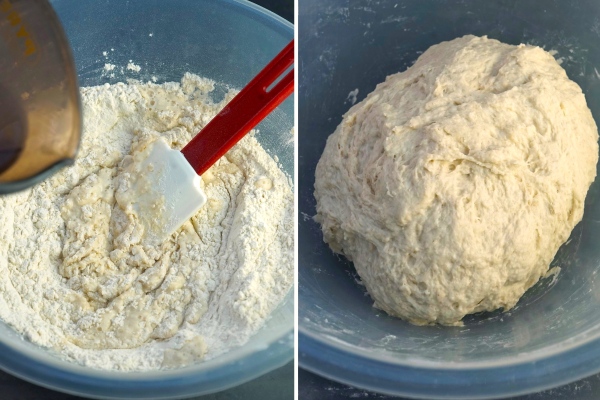
Cover the dough (I place the whole thing in a large reusable polythene bag) and leave to ferment overnight. As mentioned, you can extend the fermentation in the fridge. This is also useful if the room is warm. You can also mix and match: leave at room temperature for a few hours then put in the fridge overnight.
THE NEXT DAY
In the morning, the dough should be very bubbly and have spread out as well as risen. This is perfectly normal for wetter doughs. If it’s been in the fridge, allow to come to room temperature before continuing.
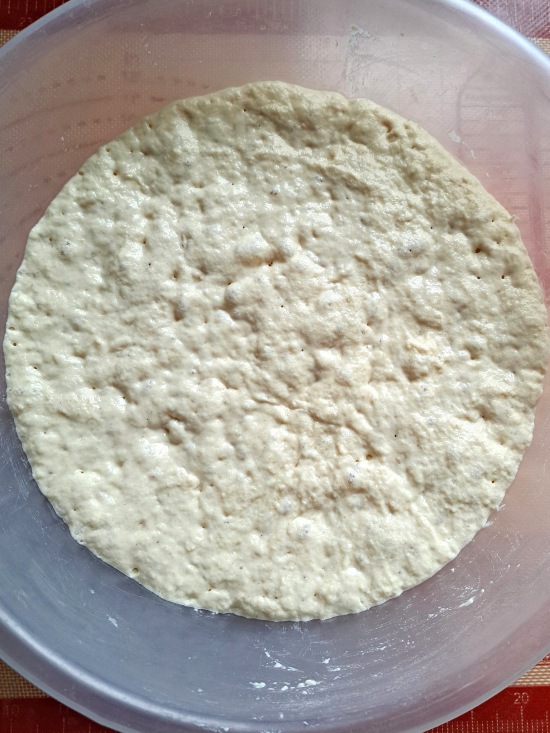
Because this is a wet dough, I recommend giving it a few stretches and folds before turning out of the bowl. This will help improve the structure of the finished rolls but takes seconds.
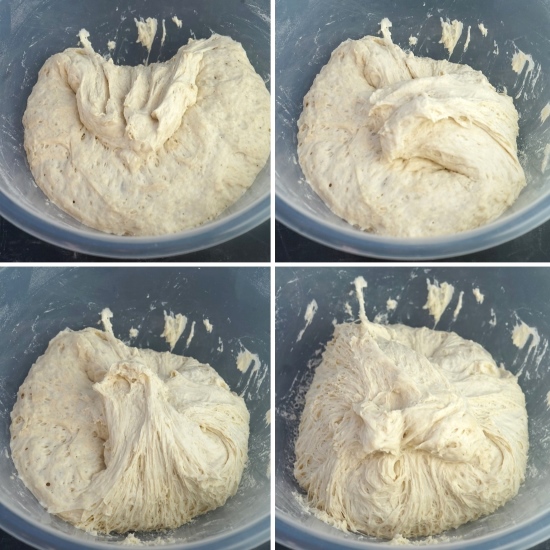
To do this, slightly wet your hands then lift the top edge (I think of it as ‘north’) and fold it into the middle. Now do the same with the ‘east’, ‘south’ and ‘west’ sides. Repeating the process twice more will give you a plump piece of dough. Don’t worry that it’s still rather shaggy looking.
SHAPING
Next, scrape the dough onto your generously floured work surface (ideally first covered with a silicone mat). Fold the dough over itself a few times, adding more flour if necessary, until you have a smooth ball of dough. Cover the ball with the empty mixing bowl and leave to rest for a few minutes while you prep your baking tray(s). This rest will relax the dough and make it easier to form the rolls.
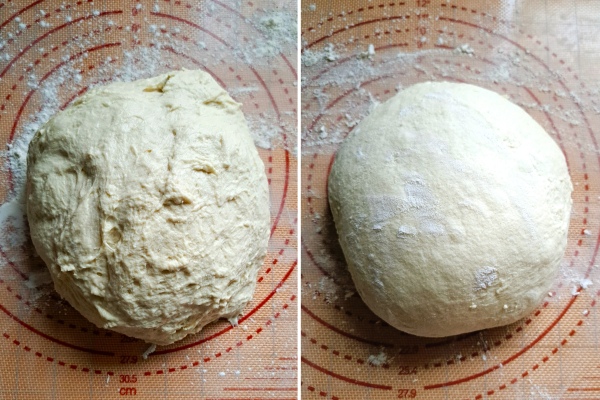
Your baking trays should be large enough to fit 8 bread rolls with space between so they can expand. I don’t have one large enough so put 6 on one and 2 on another and bake in batches. Line the trays with baking paper (I first grease them to stop the paper sliding around) then sprinkle in some flour.
Now uncover the dough and use floured hands to pat out into a rough rectangle 2 – 3 centimetres thick. Sprinkle more flour on top of the dough if it’s too sticky. If you find the dough springs back a lot, leave to rest a bit longer and try again. Use your dough scraper or a knife to cut into 8 pieces.
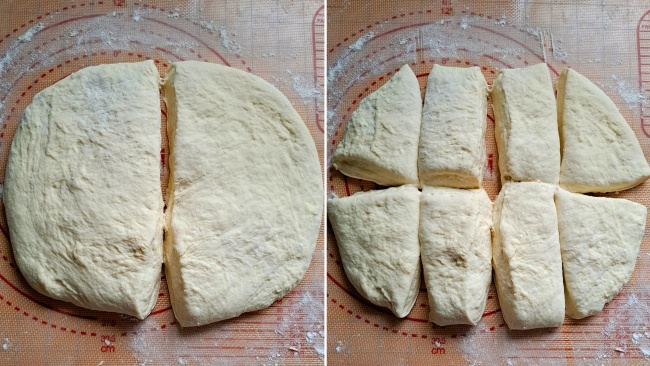
Carefully transfer to the prepared tray(s) and, if you want more uniform rolls, dip your scraper in flour and gently nudge them into neater rectangles.
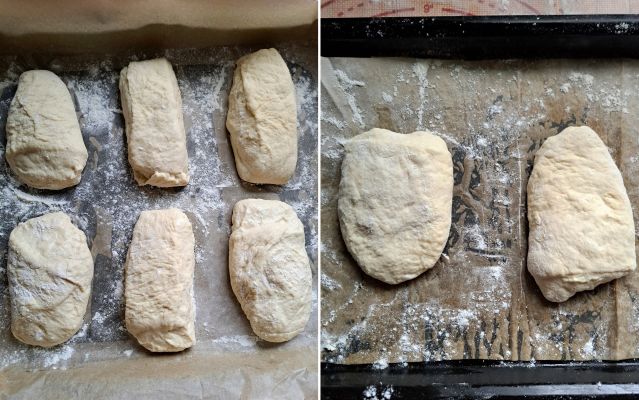
PROVING & BAKING
The rolls now need a second rise or prove, ideally somewhere warm. Exactly how long this takes will depend on the temperature, but it’s likely to be around 30 – 45 minutes. The best way to test if they’re ready to bake is to gently push a floured finger into the dough. If it leaves an indent rather than immediately springing back, it’s ready. If not, leave for longer.
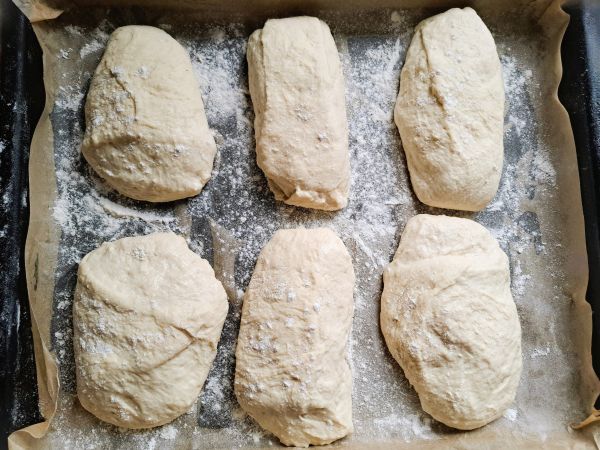
During the prove, you should preheat your oven to the temperature shown in the recipe card with a shelf in the middle position. I also take an extra step to get better ‘oven spring’. I put a deepish metal roasting tin (NOT glass: it could shatter) on the lowest shelf. As soon as you’ve put the Rustic Bread Rolls on the middle shelf, pour cold water into the hot tin below. This creates steam which delays the forming of a crust, allowing a longer rise.
After 20 minutes, carefully open the door (keep your face and hands out of the way as lots of very hot steam may billow out) and take out the tray of rolls. Take the rolls off the tray and return them to the oven, this time sitting directly on the middle shelf. (If you’ve another batch to cook then pour out the water from the tin but put back in so it stays hot. If you’ve only one batch, the tray can be discarded).
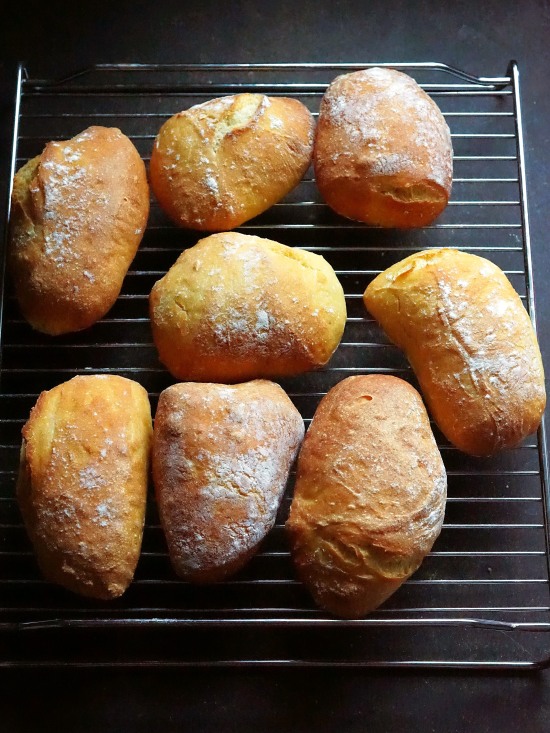
Cook for a further 3 – 5 minutes or until the rolls are golden brown and sound hollow when tapped underneath. Transfer to a wire rack to cool.
SIMPLE, VERSATILE RUSTIC BREAD ROLLS
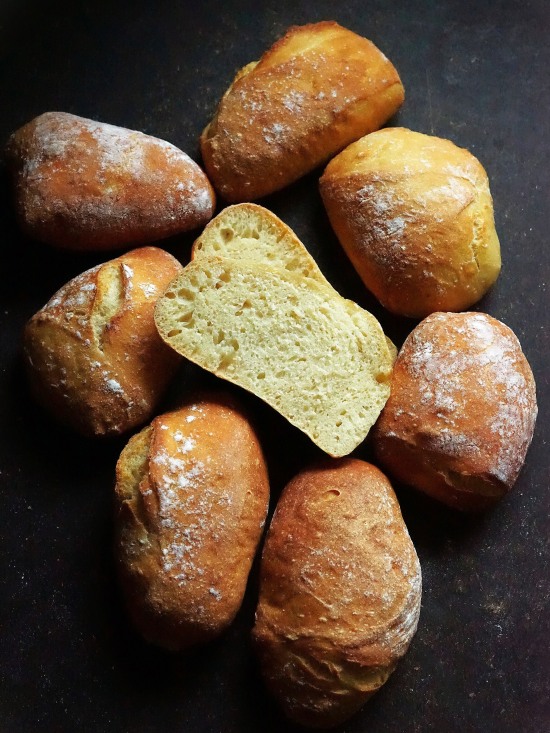
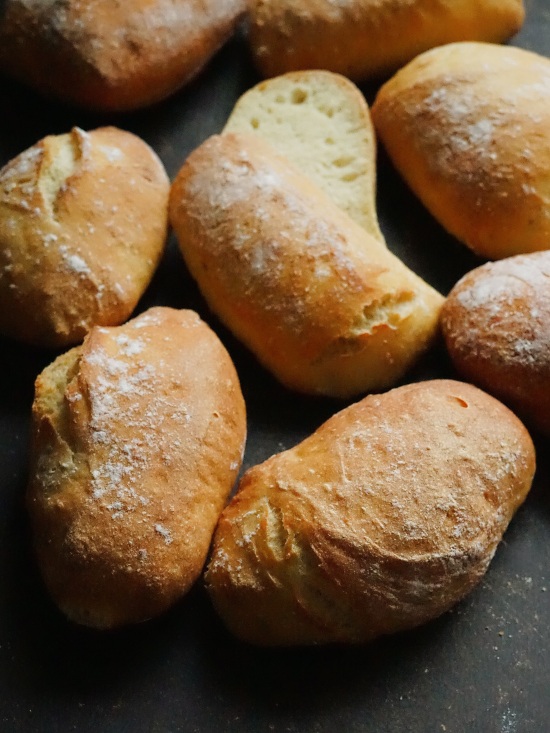
Whether you eat these easy but satisfying rolls with sweet or savoury fillings, alongside soups or salads, I think you’ll enjoy their simplicity combined with good flavour and pleasing textures. Eaten on the day of baking, the crust is wonderfully crisp. The crumb should be substantial and chewy but not heavy.
The next day, the crust will become chewier too. But like most crusty rolls you can bring the crispness back by gently reheating. Lightly rub with water to reduce the risk of drying out or burning, then pop in a moderate oven or air fryer. I’ve added details in the recipe card, but it doesn’t take long for the rolls to become fresh-like again.
Any Rustic Bread Rolls not eaten on the day of baking can also be frozen. Defrost overnight (or in a microwave if you forget) then refresh as above.
If you’ve made this recipe, I’d love to know what you thought. Do leave a comment and rating.


Rustic Bread Rolls
With a crispy crust and chewy, substantial interior, the simple no-knead dough for these rustic style rolls is fermented overnight for great flavour.
Lovely with jam or honey, with meats and cheeses, great as a side to soups and salads, or stuffed with your favourite sandwich fillings.
Please read the accompanying blog post before starting and use metric measurements.
Ingredients
- 650 g strong white bread flour (see Recipe Notes for variations)
- 2 tsp salt
- 1.5 tsp instant dry yeast (i.e. the type that doesn't need activating before adding to the rest of the ingredients)
- 450 - 500 ml water (see method to judge how much)
- extra flour for dusting
Instructions
The day before baking
-
Put the flour, salt and yeast into a large bowl and stir together.
Make a well in the centre and pour in approximately 300 ml of the water, stirring to start bringing a dough together.
Gradually add more water while stirring to form a wettish but still firm rather than sloppy dough. Stir well so there are no dry bits of flour, adding an extra splash of water if necessary.
Tip: see image in blog post for how the dough should look.
-
Place in a large reusable polythene bag, or cover the bowl, and leave at room temperature overnight, 12 - 14 hours, or until the dough is risen and very bubbly.
Tip: If the room is warm, or if you'd like a longer rise for convenience or to allow more flavour to develop, you can put the dough in the fridge for up to 24 hours. Bring the dough back up to room temperature before proceeding with the recipe.
On the day of baking
-
Stretch the dough
With slightly wet hands, stretch and fold the dough (still in its bowl) by lifting up the top edge (think of it as 'north') then folding it into the middle. Repeat with the 'east', 'south' and 'west' sides.
Repeat the process twice more to get a plump, relatively round piece of dough.
-
Fold the dough
Sprinkle flour generously over your work surface (ideally first covered with a silicone mat to reduce sticking) then scrape the dough onto it.
Fold the dough over itself a few times, adding more flour if necessary, until you have a smooth ball of dough.
Cover the dough with the upturned bowl to rest while you complete the next step.
-
Line 1 large or 2 regular baking trays with baking paper: they should be big enough to fit 8 rolls with room to expand.
Tip: lightly greasing the trays before adding the paper will stop it sliding around.
Dust generously with flour.
-
Pat the dough into a rectangle approximately 2 - 3 centimetres thick: if it keeps springing back, leave it to rest a few minutes more, then come back and try again. If it sticks to your hands, sprinkle with more flour.
Using a dough scraper or knife, cut the dough into 8 rectangles.
Transfer the pieces of dough to the prepared tray(s) and sprinkle the tops with flour.
Optional: neaten by using a dough scraper dipped in flour to push the pieces into more uniform shapes.
-
Place the tray(s) in 1 or more large reusable bags and set aside, ideally in a warm place.
Set aside until the dough springs back slowly and leaves an indent when you press with a finger rather than immediately springing back: approx. 30 - 45 minutes.
While the dough is proving preheat the oven to 220°C /200°Fan /Gas 7 /425°F with a shelf in the middle and a deep METAL roasting tin on the bottom shelf (this will be filled with cold water later to create steam and help the bread rise: DO NOT USE GLASS or it could shatter).
-
Bake the rolls
Place a tray of rolls on the middle shelf of the oven (if you have more than one tray, set the other aside somewhere cool while you bake the first).
Pour cold water from a jug into the hot roasting tin in the lower part of the oven. Immediately close the door.
Bake for 20 minutes without opening the door.
After 20 minutes carefully open the oven door (caution: lots of hot steam may billow out so keep your face, hands etc. out of the way) and take out the tray of rolls. Return the rolls to the oven, sitting directly on the middle shelf this time.
Note: if you only have one tray of rolls to bake you can also discard the tin of water at this point. But if you'll be baking another tray of rolls then pour out the water but return the empty tin to the bottom shelf so it stays hot.
Continue baking the rolls for another 3 - 5 minutes or until golden brown and they sound hollow when you tap their base.
Put the baked rolls on a cooling rack and leave until completely cold.
Bake the second tray of rolls in the same way, adding cold water to the tin on the bottom shelf.
-
Best eaten on the day of baking, or refreshed by heating as below, or frozen then defrosted and refreshed.
Reheat/refresh
Preheat an oven to 200°C /180° Fan /Gas 6 /400° F or an air fryer on 'Bake' to 160°C /350° F. Rub the rolls with cold water and bake until hot, the outside crisp and the interior soft again: approximately 8 - 12 depending on appliance and how many you're reheating.
Recipe Notes
VARIATIONS. To create a range of different rustic rolls, up to half the strong white bread flour can be replaced with other types of flour. e.g. wholemeal, malthouse. For the batch pictured in this post, I substituted half with Italian fine semolina flour. A mixture of seeds is also good (e.g. pumpkin, sunflower, flax, and sesame): stir a total of 100 grams into the flour, salt and instant yeast right at the beginning.
RELATED RECIPES