Simple Wholemeal Bread Recipe
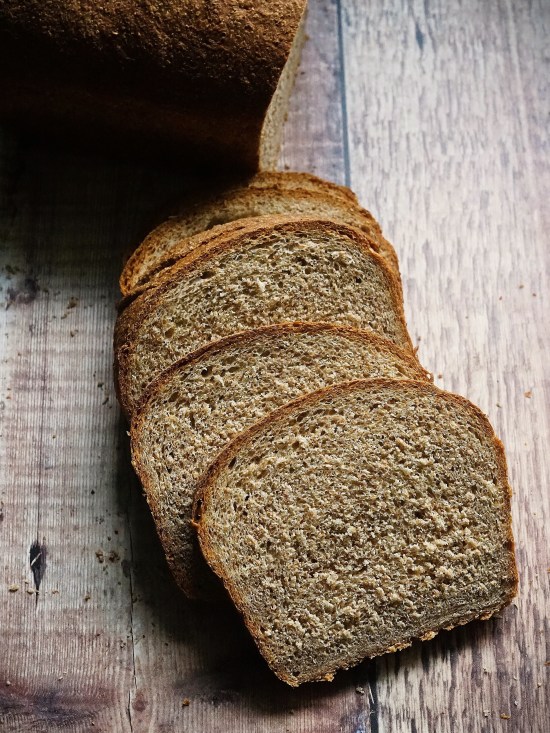
Simple Wholemeal Bread is a one hundred per cent wholemeal loaf that’s nutritious and full of flavour. Easy enough for beginners, it’s a versatile, everyday bread that’s great for sandwiches, toast, or eaten with soup and salads.
Disclosure: this post may contain affiliate links. If you buy via my links, I may earn a small commission at no extra cost to you.
Jump to Recipe
I learned many years ago (hard to believe, but almost four decades) that, once you understand the basics, it really isn’t difficult to achieve tasty wholesome, homemade bread. With minimal ingredients, your loaf will be loads healthier than mass produced, additive laden store-bought bread. And will work out much cheaper than a quality loaf from an artisan baker.
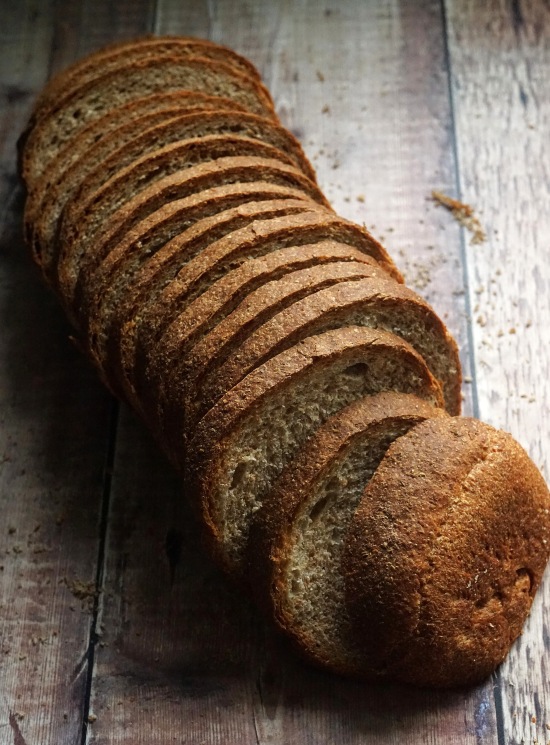
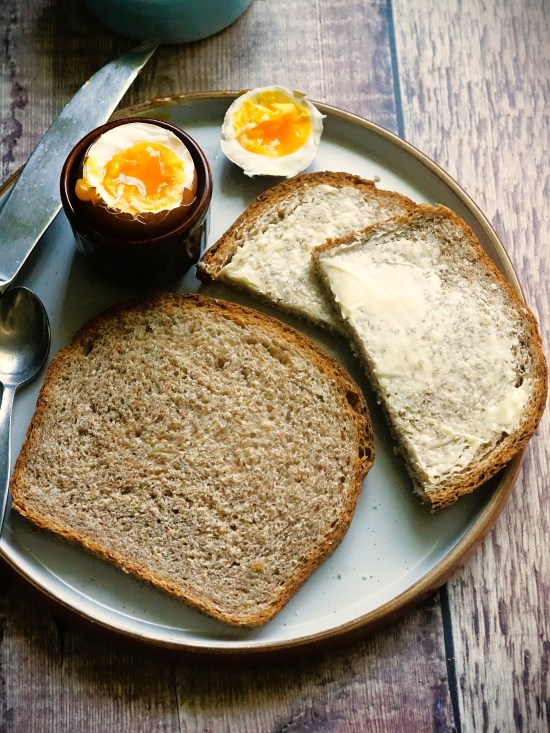
Over the years, I’ve made so many different types of bread it’s easy to forget just how satisfying a simple wholemeal loaf can be. Perfect for everyday sandwiches, to eat alongside soup, for toast, or that old favourite boiled egg, bread and butter, I think wholemeal bread is the ideal, unfussy loaf for beginners wanting to make healthy, nutritious bread.
SIMPLE WHOLEMEAL BREAD
Many of the bread recipes I share on this blog use my no-knead, overnight method. But I wanted to demonstrate with my Simple Wholemeal Bread that a kneaded, same-day loaf doesn’t have to be time consuming. The hands-on time is probably only around 20 minutes. This includes mixing up the dough, kneading, and shaping it. You’ll need to allow for the first rise or fermentation (1 – 2 hours) and a second rise or prove (roughly 45 minutes). But that’s all hands-off time.
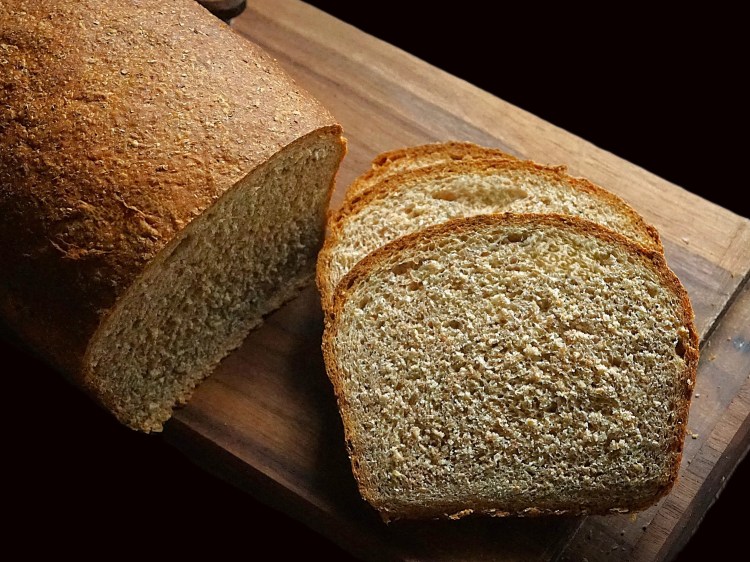
You don’t need specialist equipment either. Although I’ve baked the bread you see in this post in a 2lb/900g capacity loaf tin (paid link), you could bake it on an ordinary baking sheet. I do recommend covering your worksurface with a silicone mat (paid link) as it lessens the likelihood of sticking when kneading. Useful for many baking projects, it isn’t absolutely necessary though.
For accuracy when baking, I always recommend you use digital scales (paid link) and follow metric measurements. This is the way I create and test my recipes, so can’t vouch for the results if you attempt to convert them e.g. to American cups.
You’ll find ingredient amounts and full instructions in a recipe card at the end. But I recommend you read the whole of this post for extra tips and step-by-step images.
INGREDIENTS
There’s just a handful of ingredients you’ll need to make surprisingly tasty Simple Wholemeal Bread.
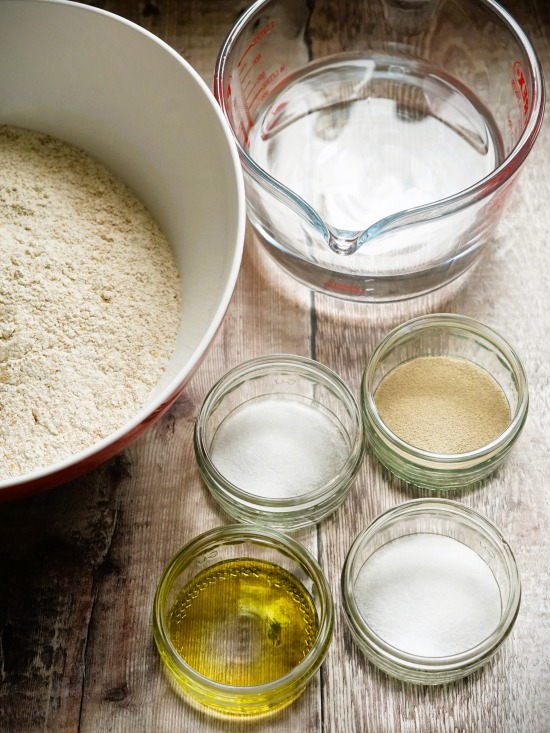
- strong wholemeal (wholegrain/wholewheat) bread flour. This has better gluten-forming properties than plain/all-purpose flour and it’s gluten that gives bread its structure and rise.
- instant dried yeast. Sometimes labelled ‘quick’, ‘fast-acting’ or similar, this type of yeast is added to the rest of the ingredients without first having to be activated in warm liquid.
- salt. Gives structure to dough as well as enhancing flavour.
- sugar. Just a teaspoon helps to feed the yeast and boosts fermentation.
- olive oil. Can improve the moisture in wholemeal loaves. But you could leave it out if preferred.
- water. Ordinary tap water heated to just above body temperature. I explain more about this in the instructions.
You’ll also need a little extra oil for greasing the bowl plus butter or oil for greasing the loaf tin.
HOW TO MAKE SIMPLE WHOLEMEAL BREAD
The first thing is to get yourself a jug of warm water; about 475 ml. Ideally, the temperature should be 38 degrees Centigrade. This is just above body temperature so, if you don’t have a food thermometer (paid link) it should feel pleasantly warm rather than hot to your finger. If in doubt, err on the side of cooler: the dough will take longer to rise, but this is better than hot water killing the yeast.
Now put the flour, yeast, salt and sugar into a mixing bowl, stir together, then make a well in the middle. Pour in the olive oil, followed by roughly 250 ml of the warm water. Stir to start bringing the ingredients together. Gradually add more water as necessary until a dough is almost formed: you’re unlikely to need all the water.
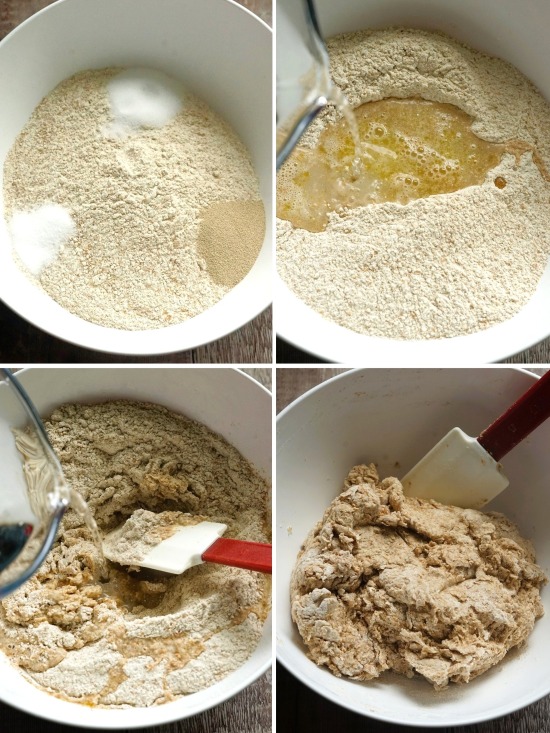
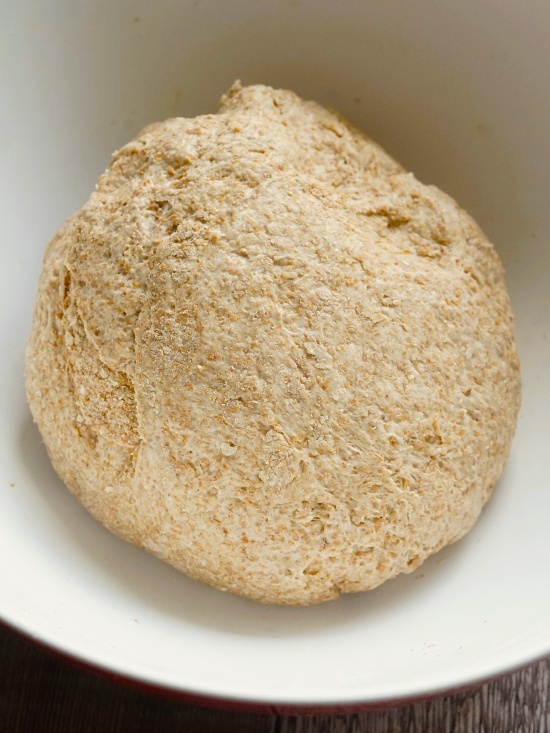
Then switch to your hands (this is the best way to gauge how wet or dry it is) to finish bringing the dough together. It should form a ball that leaves the sides of the bowl clean. Add a little more water if necessary, but only a few drops at a time. You don’t want the dough to be too wet, so use the image below as a guide.
KNEADING THE DOUGH
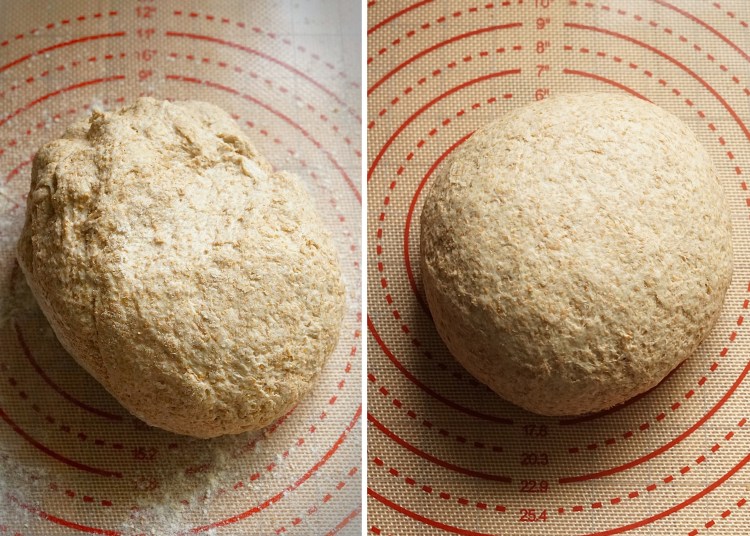
Dust some flour over your work surface, covered with your silicone mat if you have one, and transfer the dough onto it. Knead for 7 minutes until you have a smooth, soft dough. If you haven’t kneaded before, all you do is fold the dough over itself, then push it away from you using the heel of your hand. Give the dough a quarter turn, repeat, and keep repeating.
The first 45 seconds or so of this video is useful if you haven’t seen kneading before, but you can adapt the technique to suit yourself. For example, I don’t have very strong wrists so, when pushing the dough away from me, I put one hand on top of the other to use the power of both. You can also do the 7 minutes kneading in a few spurts with 5 minutes rest between.
FERMENTATION OR FIRST PROVE
The dough now needs to ferment. This is sometimes called the first rise or prove. Put a teaspoon of oil in the wiped-out mixing bowl and turn the dough in it until it has a light coating. Now cover the bowl or, as I do, put in a large reusable polythene bag.
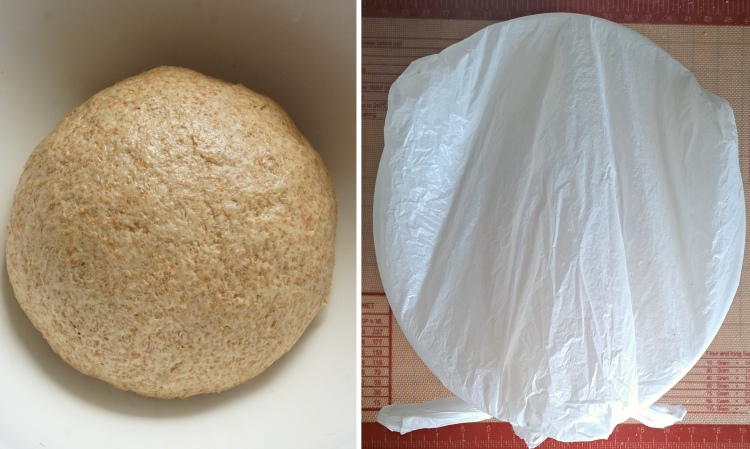
Put in a warm place and leave until doubled in size. Depending on the temperature, this could take 1 – 2 hours. These days, I use the small space of my microwave, putting a large stoneware mug filled with boiling water next to the bowl. You can also ferment at room temperature, although this will take longer.
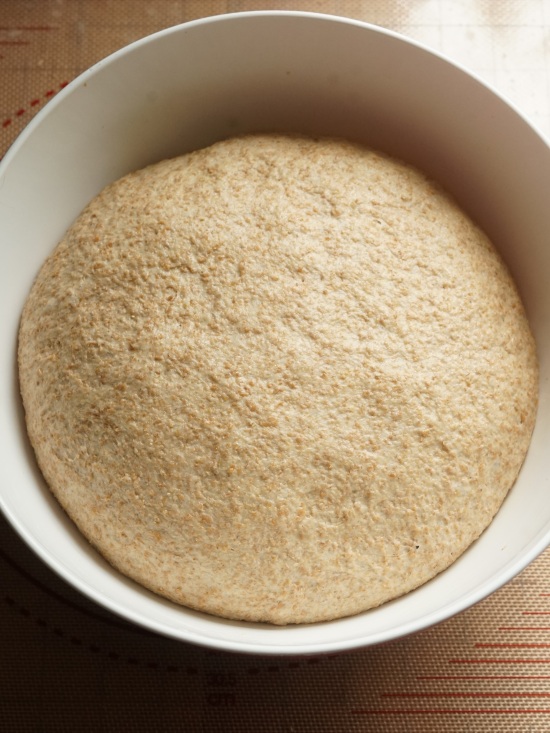
During this stage, prep your loaf tin by greasing it with butter. If preferred you could use oil, but I find butter much more reliable in preventing doughs sticking.
SHAPING THE BREAD & SECOND PROVE
When your dough has doubled, put it back on your work surface or silicone mat. Because you oiled the dough, you shouldn’t need any extra flour this time. Fold it over itself a few times until smooth, shaping it to fit inside your loaf tin.

Put the dough in, cover or put back in the polythene bag, then return it to a warm spot for its second rise or prove. Depending on the temperature, this may take 30 – 45 minutes. The best way to test whether this, or any other dough, is ready to bake is to gently poke a finger into it. If the dough slowly springs back but leaves a slight indentation (as in the right side of the image below), it’s ready. If the dough springs back quickly then it’s not ready, so leave a little longer and check again.
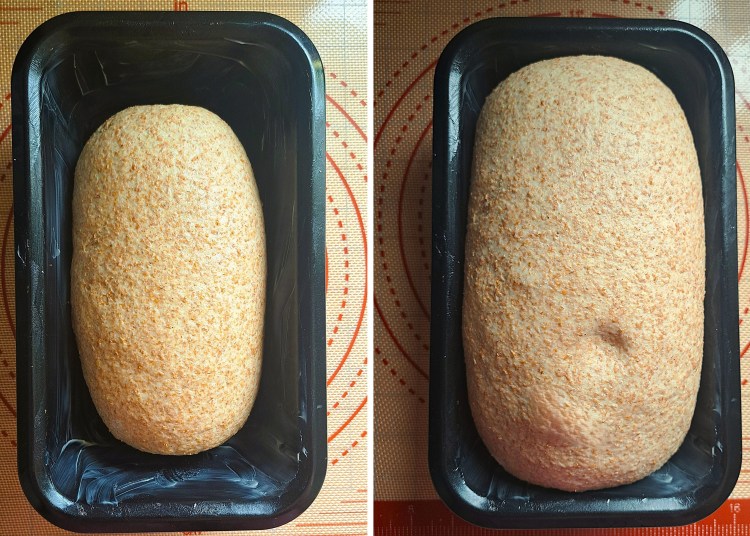
During this prove you should preheat your oven to the temperature shown in the recipe card with a shelf in the middle position. I’ve also a couple of extra, optional tips to help get a good rise to your Simple Wholemeal Bread.
- Put a shallow baking tray on the middle shelf to heat up. This will provide immediate bottom heat and an extra boost to your bread.
- Put another shelf in the lowest position with a deep metal roasting tin on it to preheat too. Later, you’ll pour cold water into this to create steam. This delays a crust forming so your dough can rise for longer. Important: DO NOT use a GLASS baking dish as it could shatter when the cold water goes in.
BAKING SIMPLE WHOLEMEAL BREAD
When ready to bake, have ready a jug of cold water, then put the loaf on the shallow baking tray on the middle shelf. Pour cold water into the deep roasting tin to a depth of a few centimetres then immediately close the door. Bake for 30 minutes without opening the door.
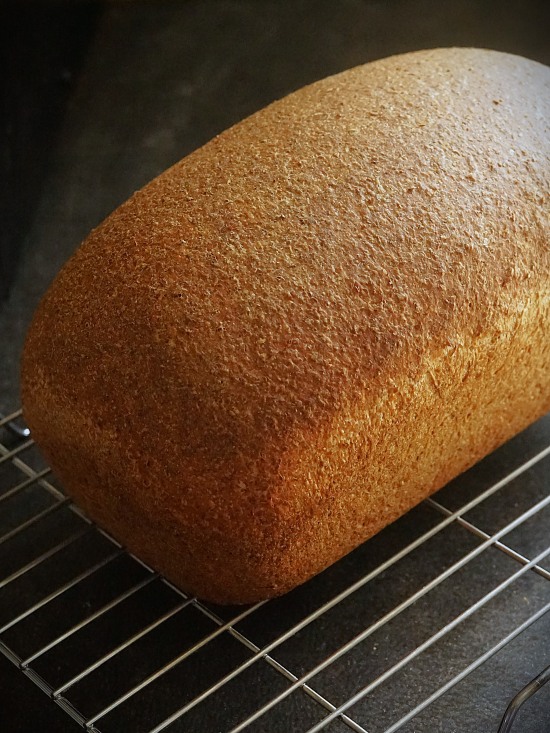
After 30 minutes carefully open the oven door: keep your hands and face out of the way in case there’s any steam left that could rush out. Discard the bottom tray: it may still contain some water or it may have all evaporated. Take out the shallow tray with the bread on it. Tip the bread out of its tin then return the loaf to the oven, placing it directly on the shelf. Bake for another 10 minutes or until the loaf sounds hollow when you tap it underneath.
Place the loaf on a wire rack until completely cold before slicing.
NUTRITIOUS, FLAVOURSOME & SIMPLE HEALTHY BREAD
A basic wholemeal loaf was one of the first breads I ever made, decades ago now. I then went on to make all kinds of bread, combining different flours, seeds, and flavourings. But, recently rediscovering just how good Simple Wholemeal Bread can be, I’ve found myself baking this loaf every week. Easy to make, and with minimal hands-on time, it’s nutritious as well as tasty.

Whether you eat it for breakfast with eggs, nut butters or other spreads, toasted or not, or make it into satisfying sandwiches for lunch, or eat alongside soups and salads, I think you’ll appreciate this bread as much as I do. And if you’ve never made any kind of bread before, I hope you’ll agree that it really isn’t difficult to achieve something rather good.
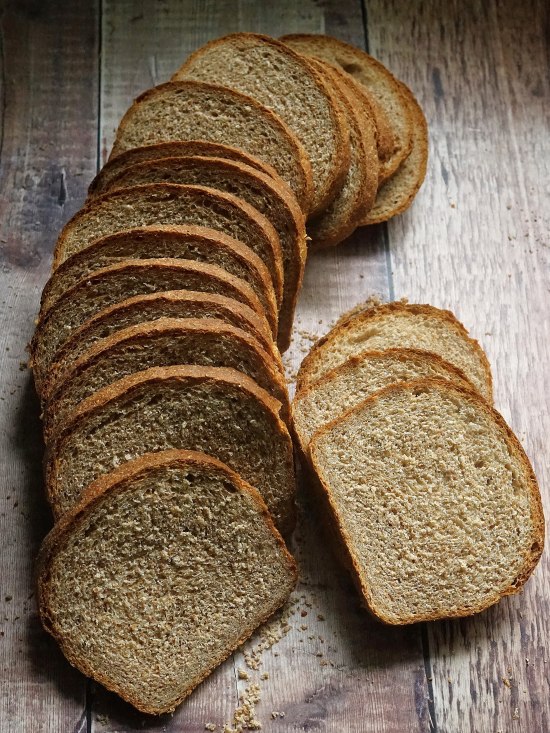
The bread should keep well for 3 days, although being a household of just two people I usually freeze it on the second day. To avoid waste, I always slice before freezing so that I can take out just exactly what I need.
If you’ve made my Simple Wholemeal Bread, I’d love to know what you thought. Please leave a comment and rating.

Simple Wholemeal Bread
A one hundred per cent wholemeal loaf that's nutritious and full of flavour. Easy enough for beginners, it's a versatile, everyday bread that's great for sandwiches, toast, or eaten with soup and salads.
It's recommended that you read the accompanying blog post before starting the recipe and use digital scales and metric measurements.
Ingredients
- 600 g wholemeal/wholegrain strong bread flour (plus extra for dusting)
- 2 tsp salt
- 1.5 tsp instant dried yeast (i.e. the type that does not need activating before adding to the rest of the ingredients)
- 1 tsp sugar
- 1 tbsp olive oil
- 350 - 475 ml warm water (see Recipe Notes)
- 1 tsp any oil (for greasing the bowl)
- butter for greasing a 2lb/900 ml loaf tin (can be replaced with sunflower or other bland oil)
Instructions
-
Put the wholemeal bread flour in a large mixing bowl along with the salt, yeast, and sugar. Stir.
Make a well in the middle and pour in the olive oil.
Gradually add approximately 250 ml of the warm water to the olive oil, stirring as you do, to start bringing the mixture together. Add more water, a little at a time, until a dough has almost formed: you are unlikely to need all the water.
Now switch to your hands and fold/knead the dough into a ball that leaves the sides of the bowl clean: add a little more water if necessary but don't let the dough become too wet: see image in the blog post for how it should look.
-
Dust a small amount of wholemeal flour over your work surface (ideally covered with a silicone mat) then knead for 7 minutes. If the dough seems wet, use the smallest amount of extra flour possible to prevent sticking.
-
Put the teaspoon of oil in the wiped-out bowl and turn the dough over in it.
Cover the bowl or place it in a large reusable polythene bag.
Put in a warm place (e.g. in a microwave or other small space with a jug or mug of boiling water placed inside) and leave until doubled in size: 1 - 2 hours depending on the temperature.
-
Grease a 950 ml / 2 lb capacity loaf tin with butter or oil (the dough is less likely to stick if you use butter).
-
When the dough is risen, transfer it to your work surface, ideally covered with a silicone mat. Note: due to the oil, you should not need to add extra flour during this stage.
Fold the dough over itself several times until it's smooth, at the same time shaping it to fit the loaf tin.
Put the dough in the prepared tin, place back in a large polythene bag or cover it, then return to a warm place until almost doubled in size (approx. 45 minutes depending on temperature).
-
While the dough is proving:
Preheat your oven to 220°C / 200°Fan /Gas 7 / 425°F with a shelf in the middle.
Tip 1 put a shallow baking tray on the middle shelf to heat up: this will give the dough an immediate boost.
Tip 2 place another shelf in the lowest position and put a deep roasting tin on it to preheat. Later, you will pour in cold water to create steam and help the bread rise. DO NOT use a GLASS roasting dish as it could shatter when the cold water goes in.
-
Check that the dough is proved:
If, when a finger is gently inserted, the dough slowly springs back but leaves a slight indentation then it is ready to bake.
If the dough springs back quickly then it's not yet fully proofed: leave another 5 -10 minutes and check again.
-
Place the bread on the middle oven shelf and pour cold water from a jug into the hot roasting tin below. Immediately close the door and bake for 30 minutes.
-
After 30 minutes open the oven door (be careful: steam could rush out) and remove the tin of water.
Remove the loaf tin (and any tray you put it on), take the bread out, then put it back in the oven directly on the shelf.
Bake for another 10 minutes or until the base sounds hollow when you tap it.
-
Leave on a wire rack until completely cold before slicing.
Best eaten within 3 days or can be frozen.
Tip: slice before freezing so you can take out as much as you need without waste.
Recipe Notes
Water temperature
Ideally, the temperature of the water should be around 38 degrees Centigrade. If you don't have a food thermometer then the water should be pleasantly warm if you put a finger in it, not hot. If in doubt, err on the side of cooler: the dough will take longer to rise, but this is better than hot water killing the yeast.
Amount of water
Different flours absorb varying amounts of liquid, so it isn't possible to be exact about how much water you will need. I recommend making up a 475 ml jug of warm water and gradually add only as much as necessary.
MORE BREAD RECIPES