
Sicilian Semolina Bread (pane di semola rimacinata)
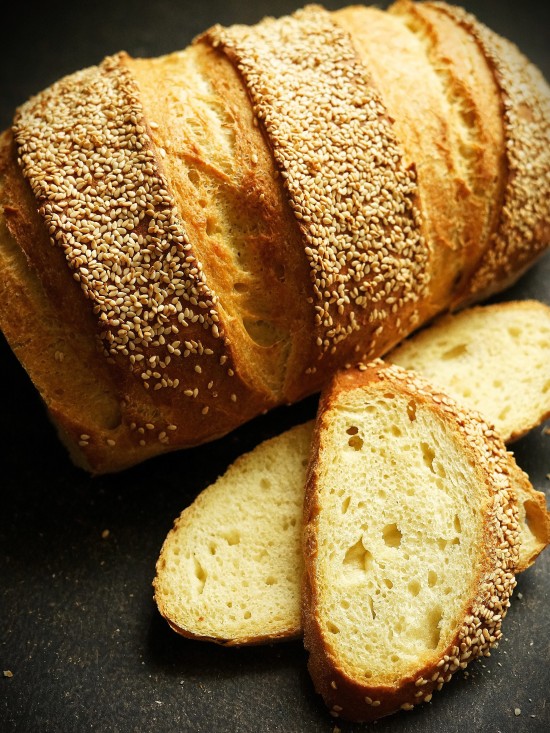
Sicilian Semolina Bread is a flavoursome, beautifully golden-coloured loaf with a chewy crumb and crispy, sesame-topped crust. It’s made with the hard durum wheat used for pasta which is also excellent for baking bread once it’s double-milled.
In this post I offer a choice of methods for making a Sicilian bread with one hundred per cent semolina flour and also a Sicilian-style loaf which incorporates a proportion of ordinary strong bread flour for a slightly different result. Either one makes a fabulous, versatile loaf.
Disclosure: this post contains affiliate links. If you buy via my links, I may earn a small commission at no extra cost to you.
Jump to Recipe

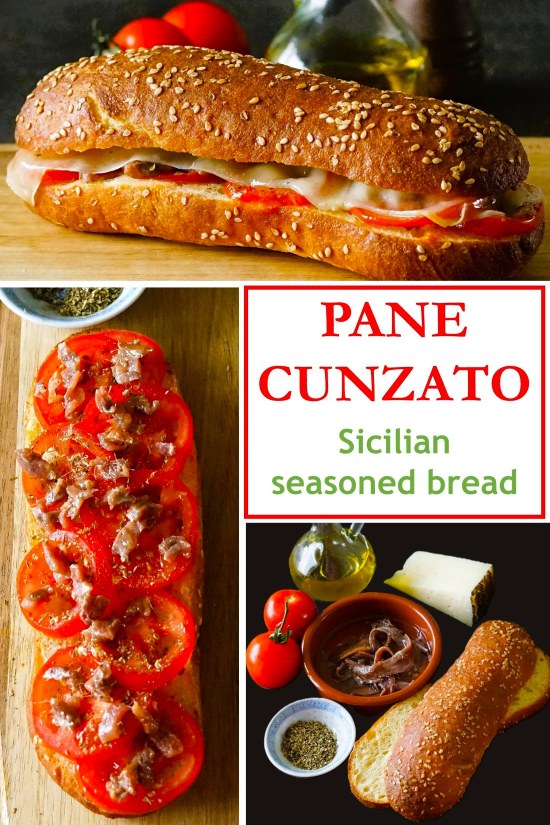
I first came across Sicilian Semolina Bread in Clarissa Hyman’s beautiful book Cucina Siciliana*. She says that the primrose-coloured bread can ‘light up a table’. Baked into different shapes, it’s sometimes used to make Pane Cunzato (pani in Sicilian dialect, pictured below right) which literally means ‘seasoned bread’.
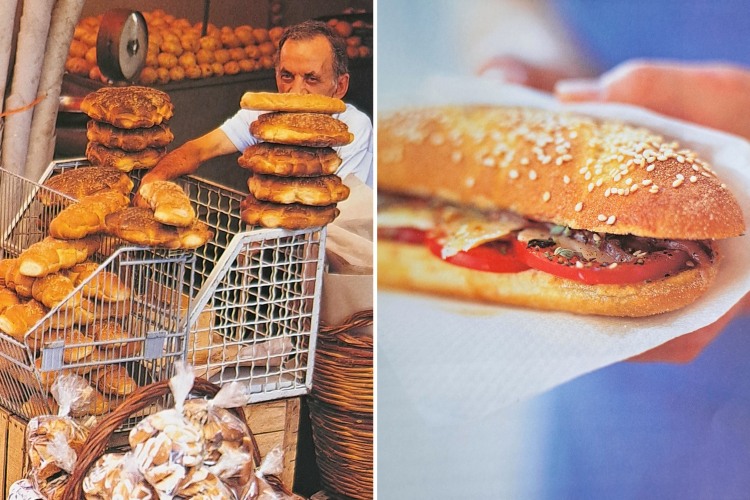
While I’ve used all sorts of bread and bread rolls to make this incredibly delicious sandwich of tomato, oregano, anchovy, olive oil and cheese, it was only browsing through the book again recently that I decided to learn more about semolina bread itself.
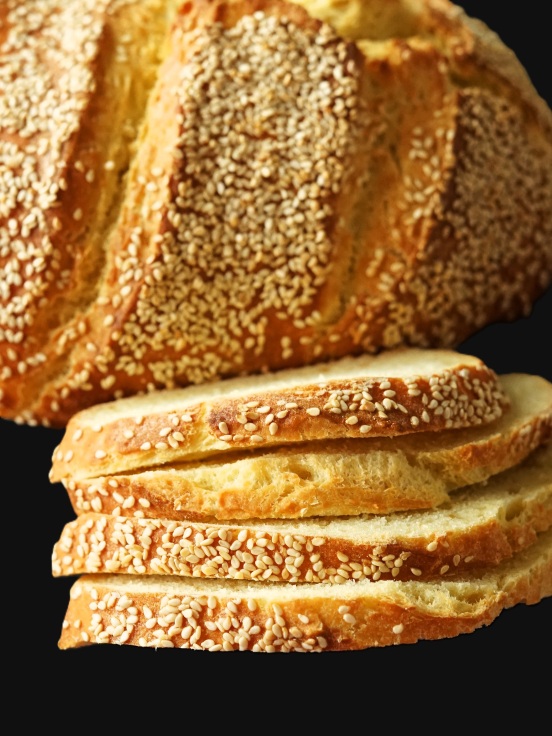
* If you’d like a copy of Cucina Siciliana hard copies can sometimes be had here and the paperback here . Please note these are paid links: I may earn a small commission if you buy via them but at no extra cost to you.
I’ve now made several loaves of this beautiful bread [UPDATE: and Semolina Baguettes too]. But I’m already quite addicted to the subtly special flavour, crispy crust with toasted nutty sesame seeds, and soft yet somehow also firm crumb.

As if that wasn’t enough to tempt you, Sicilian Semolina Bread isn’t even difficult to make. I use a no-knead overnight method and bake the bread in a covered pot. However, I’ve also added instructions for those who’d prefer to make it as a same-day kneaded loaf and/or bake it on a tray.
You’ll find ingredient amounts and full instructions in the recipe card at the end. I strongly recommend you read the whole of this post first though for extra tips and step-by-step images.
SEMOLINA & SEMOLA RIMACINATA
Semolina is made from milling durum wheat. Durum is a type of hard wheat (durum is Latin for ‘hard’) which, after milling, has a much coarser texture than common wheat. High in protein, the pale yellow semolina is most commonly used for making pasta. However, if it’s milled a second time the semolina becomes finer. It’s this double- or re-milled flour, semola rimacinata in Italian, that’s used to make wonderful bread.

While this flour is more expensive than regular wheat flour, I think it’s worth it for any home baker who loves experimenting and trying new types of bread. I get it online where buying in bulk can bring the price down considerably. At the time of writing, buying six 1-kilo bags (paid link) of semola rimacinata works out half the price of buying just one kilo (paid link).
SICILIAN SEMOLINA BREAD
Sicilian Semolina Bread is traditionally made with one hundred per cent double- or re-milled semolina flour. However, I’ve also experimented with replacing twenty-five per cent with strong white bread flour for a slightly different result. I’ve outlined below the differences so you can judge for yourself which you’d like to start with.

- The 100% semolina flour required more water to bring the dough together and didn’t rise as much during fermentation.
- As you’d expect, the 100% semolina loaf had more of a golden yellow colour inside and out, although the difference wasn’t huge.
- The 100% loaf was a little firmer with less volume. However, like the 75% semolina loaf, the texture was extremely pleasing: soft but with a satisfying chew.
- The flavour and aroma of the wholly semolina bread were a little more pronounced: hard to describe, but perhaps a little sweeter, almost corn-like?
- The 100% loaf is known for cracking while baking and mine did partly burst from my slashes.

In conclusion, I’d say that both make excellent loaves. Replacing some of the semolina flour will give you a bread more like a common wheat flour loaf, but with extra flavour, aroma and slightly different texture. But a 100 per cent Sicilian pane di semola remacinata is something unique and I recommend you try that too.
In addition to the flour, for my version you’ll need instant dried yeast (i.e. the sort that doesn’t need activating before adding to the other ingredients), salt, olive oil, and water. Some recipes add honey, although I do not.
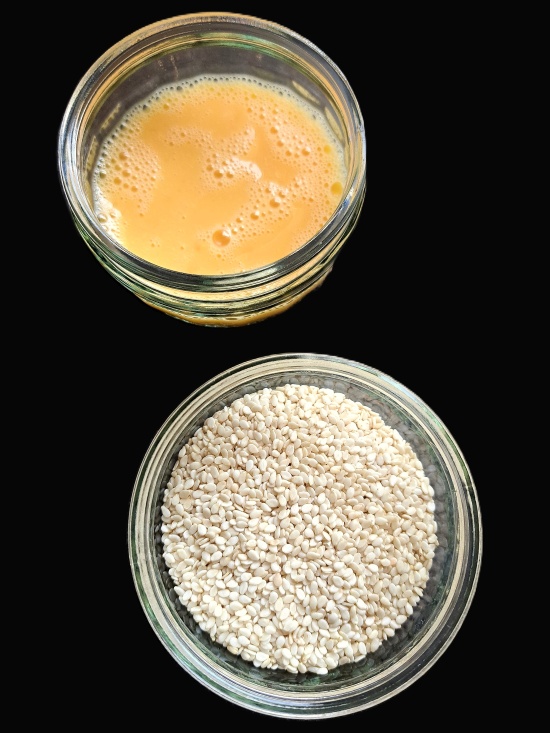
To get the distinctive topping, you’ll need sesame seeds plus a small beaten egg to ensure they stick.
A CHOICE OF METHODS
For this, and most of my homemade breads, I use a no-knead, overnight method. Many years ago, I discovered that a wetter than usual dough combined with a long fermentation can replace the kneading of conventional bread making.

This develops the gluten which helps doughs rise and gives bread its structure. It’s this method you’ll see in the photographs here but, as I want lovely Sicilian Semolina Bread to reach a wider audience, I’ve added instructions in the notes to the recipe card at the end for those who’d like a same-day kneaded loaf.
EQUIPMENT
For a good rise and wonderfully crispy crust, I bake the bread in a heavy lidded pot. The interior gets incredibly hot and steamy which keeps the dough softer for longer as crust formation is delayed. The pot, including any handles or knobs, needs to withstand temperatures up to 240°C / 220° Fan / Gas 9 / 475° F.
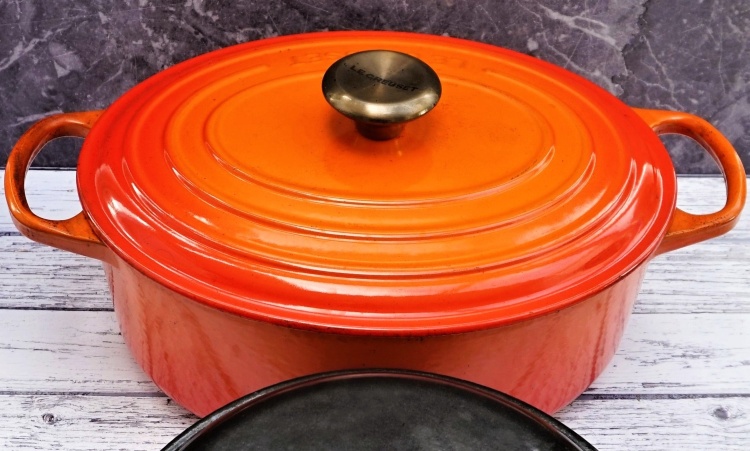
Although they’re expensive, I think Le Creuset pots are a great investment. They last for years (one of mine has been used for baking bread for over a decade) and can be heated to the required temperature. Of course, you may be able to find cheaper ones with similar properties, or you could use a Dutch oven. For Sicilian Semolina Bread I use my Le Creuset 29cm / 4.7 litre oval casserole (paid link). For round loaves I use my 24 cm Le Creuset (paid link) which is also great for soups and stews.
Note: If you don’t have a suitable pot then the bread can be baked on a baking tray. You’ll find instructions in the notes to the recipe card at the end.
During the dough’s second rise or prove, I place it in a baker’s basket called a banneton. These usually come with a cloth liner. For oval loaves I have a 25 cm long basket (paid link) and for round loaves a 23 cm diameter banneton (paid link). You can also improvise with a suitably sized bowl or other container lined with a cloth.
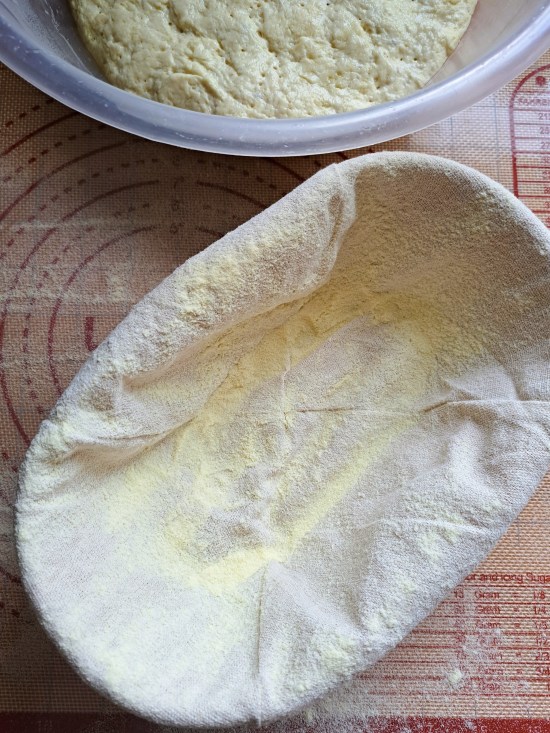
Other equipment: optional but highly recommended
(paid links)
Silicone spoon Much better than a wooden spoon when stirring up doughs.
Silicone mat A simple bit of kit useful for all sorts of baking, not just breads. You need less flour to prevent sticking, and it makes cleaning up easier too.
Dough scraper Very cheap to buy (you sometimes get one free with the silicone mat above), a scraper makes handling dough and removing it from bowls and worksurfaces much easier.
Baker’s blade Because breads often split as they rapidly rise in the oven, we slash the dough to control where this happens. You could use a sharp knife, but a lame or grignette (basically something to safely hold a razor blade) is much more effective.
MAKING THE DOUGH FOR SICILIAN SEMOLINA BREAD
To make the dough, put the semolina flour (plus bread flour if using), salt and yeast into a large mixing bowl. Stir them together, make a well in the centre and add one tablespoon of olive oil. Now add approximately 250 ml of tap water (no need for warm water with overnight fermentation) and start stirring to bring the ingredients together.
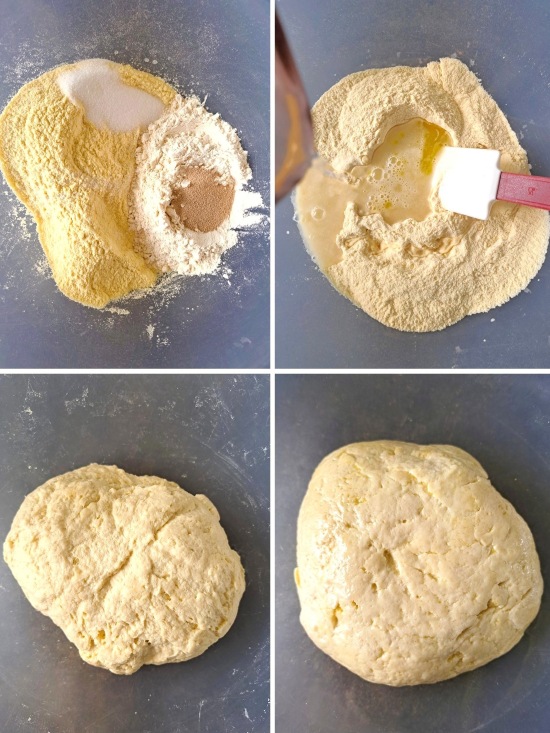
As you stir, gradually add more water as necessary to create a dough. There should be no dry flour visible, but the dough should be firm and not overly wet. Use the images above as a guide. Now add a teaspoon of olive oil to the bowl and turn the dough around in it to coat.
Cover the dough (I place the whole thing in a large reusable polythene bag) and leave to ferment overnight. If the room is warm, you can do the fermentation in the fridge. Alternatively, leave at room temperature for a few hours then put in the fridge overnight.
THE NEXT DAY
In the morning, don’t be surprised if the dough has spread out as much as it’s risen. This is normal with wetter doughs. It should be quite bubbly underneath. If it’s been in the fridge, allow to come to room temperature before proceeding.
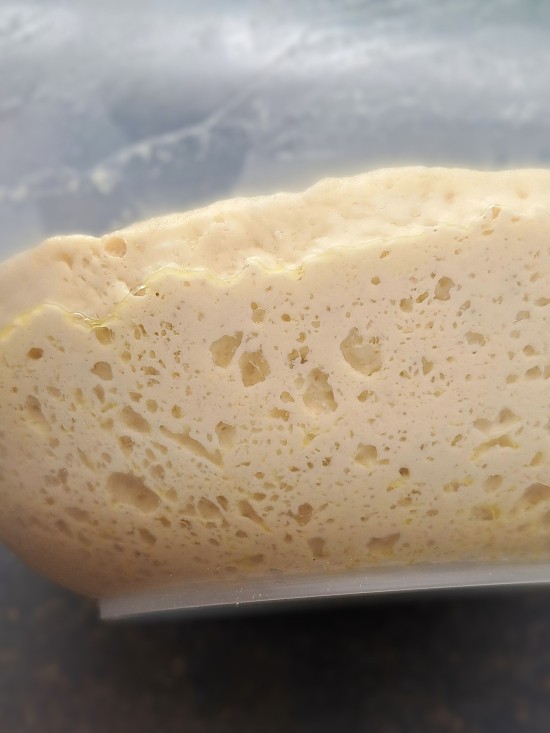
Dust a little semolina flour over your work surface, ideally covered with a silicone mat, sprinkling some in your lined banneton or improvised proving vessel too. Transfer the dough onto the work surface and fold over itself several times until smooth. Add more semolina flour if needed to prevent sticking, but try to use as little as possible. Fold the dough again, this time shaping it to fit your proving vessel.
Sprinkle the top with more semolina then put it in the vessel with the rounded side facing DOWN. Dust the side now facing up with a little semolina then either cover again or put back in your large polythene bag. The dough now has its second rise or prove, ideally in a warmer spot. These days, I use the small space of my microwave, putting a large stoneware mug filled with boiling water next to the bowl. You can also prove at room temperature, although this will take longer.
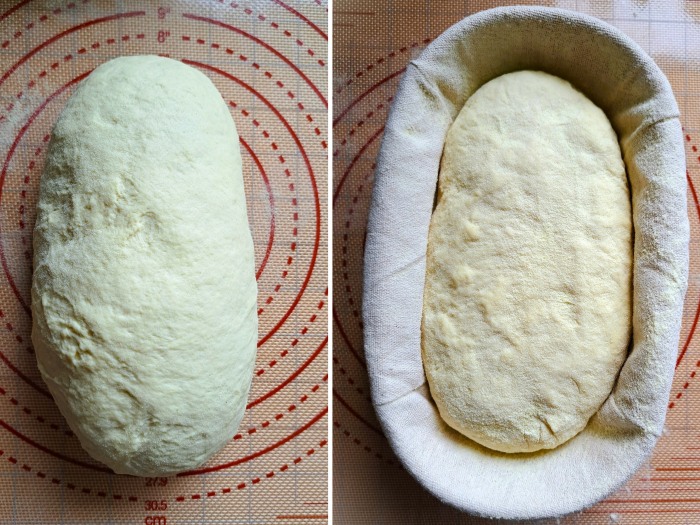
Depending on temperature, the prove should take 30 – 45 minutes. The dough may or may not almost double, but the best way to check if the dough is ready is to gently insert a finger. Does the dough quickly or slowly spring back? If it springs back slowly and an impression is left by your finger, then the dough is ready. If it springs back immediately and doesn’t leave an impression, prove for longer then check again.
Towards the end of the second rise you should preheat your oven to the temperature shown in the recipe card. Be sure to put in the cooking pot and its lid to preheat too.
BAKING SICILIAN SEMOLINA BREAD
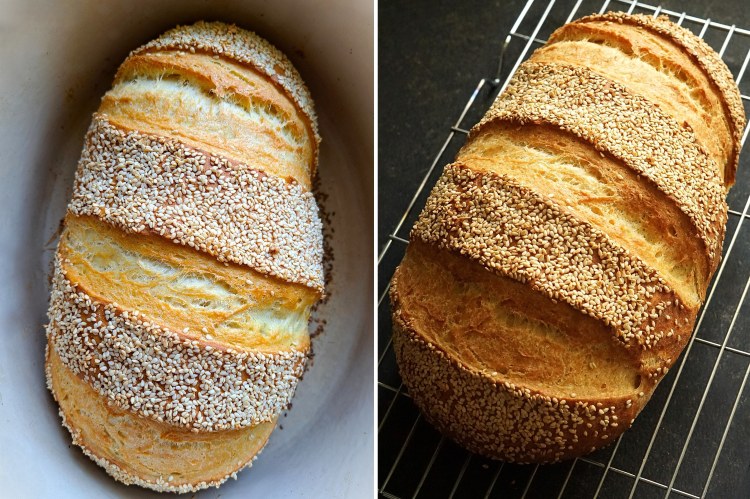
When ready to bake, remove the pot from the oven and take off the lid. Carefully flip the dough into the pot so the rounded side is now facing UP. Brush beaten egg all over the top of the dough then sprinkle thickly with sesame seeds. Use a sharp knife, razor blade or baker’s lame to make three slashes across the width of the dough (or make your own preferred pattern). Put the lid on the pot, place in the oven and bake for 35 minutes.

After 35 minutes, reduce the temperature to that shown in the recipe card. Remove the pot from the oven, tip the bread out of it, then return the loaf to sit directly on the oven shelf. Bake for a further 5 – 8 minutes or until the bread is cooked through: it should sound hollow when tapped underneath.
Place the loaf on a cooling rack until completely cold before slicing or storing.
EASY SEMOLINA BREAD
I love cutting through the crispy crust of a pane di semola rimacinata with its enticing aroma of toasted sesame seeds. Inside, the crumb is soft yet firm; it doesn’t crumble when you slice it even on the same day. The light golden yellow colour, slightly deeper if you use 100 per cent semolina flour, is always wonderful to see.

Try it, and I hope you’ll agree that this special loaf isn’t difficult to achieve either. I find the doughs for both 100 per cent and 75 per cent semolina bread very easy to work with. It’s silky rather than sticky, so I don’t need to use much extra flour while shaping. The small amount of olive oil I add to the dough probably helps, along with leaving out the honey found in many recipes.

Sicilian Semolina Bread is particularly good with Mediterranean flavours like tomatoes, garlic, and oregano, pane cunzato style. It’s lovely in a sandwich with these and you can add anchovies, cheese, and/or capers too. The soft yet chewy bread is good with antipasto like cured meats, fresh or preserved vegetables. But I also eat it as a superior white bread with almost anything – including boiled eggs or bacon sandwiches. It also makes wonderful toast.
If you’ve made this recipe, I’d love to know what you thought. Please do leave a comment and rating.

Sicilian Semolina Bread (pane di semola rimacinata)
A flavoursome, beautifully golden-coloured loaf with a chewy crumb and crispy, sesame-topped crust. Made with double-milled semolina flour the bread is associated with Sicily.
In this version it's made using an overnight, no-knead method and baked in a lidded pot: to make as a same-day kneaded bread and/or baking it on a tray instead of in a lidded pot see Recipe Notes 3 and 4 below.
Please read the accompanying blog post before starting the recipe and use digital scales and metric measurements.
Ingredients
- 450 g double-milled semolina flour (see Recipe Note 1) + extra for dusting
- 150 g strong white bread flour (can be replaced with more semolina flour: see Recipe Note 2)
- 2 tsp salt
- 1.5 tsp (7g) instant dried yeast (i.e. the sort that doesn't need activating before adding to the rest of the ingredients)
- 1 tbsp + 1tsp olive oil
- 350-400 ml/g (approx.) water (does NOT need to be warm)
For the topping
- 1 small egg, beaten (you will not need it all)
- 2-3 tbsp sesame seeds
Instructions
The night before baking
-
Put the semolina flour, and strong bread flour if using, into a large mixing bowl along with the salt and instant yeast. Stir to combine.
Make a well in the middle and add 1 tbsp of the olive oil.
Add approximately 250 ml of water to the olive oil and stir to start bringing the ingredients together. Add more water, a little at a time, until a dough has formed: you may not need all the water or you may need a little more. There should be no dry flour visible, but the dough should be firm and not sloppy.
Add 1 tsp of olive oil to the bowl and turn the dough in it so it's coated.
Cover the dough or place the whole thing in a large reusable polythene bag and leave to ferment at room temperature overnight.
Tip: If the room is warm you can do the fermentation in the fridge or leave at room temperature for a few hours then put in the fridge overnight.
On the day of baking
-
The dough should have risen, spread out and be bubbly underneath. If not, leave a little longer. If it's been in the fridge, allow to come to room temperature before proceeding.
-
Dust a little semolina flour over your work surface, ideally covered with a silicone mat, and transfer the dough onto it. Fold over itself several times until smooth: add more semolina flour if needed to prevent sticking, but try to use as little as possible.
-
Sprinkle semolina flour inside a lined banneton (or an improvised proving vessel such as a bowl lined with a tea towel).
Fold the dough again, this time shaping it to fit your proving vessel. Sprinkle the top with more semolina then put it in the vessel with the rounded side facing DOWN. Dust the side now facing up with a little semolina.
Place in a large reusable polythene bag or cover it and leave in a warm place for approximately 30 - 45 minutes.
While it's proving: preheat your oven to 240°C / 220° Fan / Gas 9 / 475° F and put a lidded cast iron pot or Dutch oven on the middle shelf.
-
Check if the dough is ready to bake: gently insert a finger into the dough and see if the dough quickly or slowly springs back.
- If the dough springs back slowly and leaves an impression, it's ready.
- If it springs back immediately and doesn't leave an impression then prove another 5 - 10 minutes and check again.
-
When ready to bake, remove the pot from the oven and take off the lid.
Carefully flip the dough into the pot so the rounded side is now facing UP.
Brush beaten egg all over the top of the dough then sprinkle thickly with sesame seeds.
Use a sharp knife, razor blade or baker's lame to make three slashes across the width of the dough (or make your own preferred pattern).
Put the lid on the pot, place in the oven and bake for 35 minutes.
-
After 35 minutes, reduce the heat to 220° C / 200° Fan / Gas 7 / 425°F.
Remove the pot from the oven, tip the bread out of it, then return the loaf to sit directly on the oven shelf.
Bake for a further 5 - 8 minutes or until the bread is cooked through: it should sound hollow when tapped underneath.
-
Place on a wire rack until completely cold before slicing.
Best eaten within 3 days or can be frozen.
Tip: slice before freezing so you can take out as much as you need without waste.
Recipe Notes
Note 1: Semolina Flour. For this recipe you will need semolina flour that has been double- or re-milled so that it is finer than regular semolina. Look out for products labelled semola remacinata ('remilled semolina') in Italian. Recommended (paid links): 1kg bags here or buy in bulk to save money 6 x 1kg bags here.
Note 2: 100% vs 75% semolina bread. Incorporating some strong white bread flour into the dough gives a slightly more risen result than using all semolina flour. Other differences are described in the accompanying blog post.
Note 3: Same day, kneaded version. Follow the recipe except use lukewarm water (no more than 38 degrees C) to make the dough and use less of it. You may wish to add a teaspoon of sugar (or honey which is sometimes used in this loaf) to help feed the yeast during the shorter fermentation. The dough should not have any dry flour visible but it should not be too wet or you won't be able to knead it. Knead for 8 - 10 minutes, or until smooth and elastic, before leaving to ferment in a warm place for 1 - 2 hours or almost doubled in size. Proceed with the recipe.
Note 4: Baking on a tray instead of a covered pot.
- Make the dough following the overnight no-knead method as per the recipe card or as a same-day kneaded version as Note 3 above.
- During the second rise or prove, preheat the oven to 200°C / 180°C Fan / Gas 6 /400°F with a shelf in the middle and a deep roasting tin [DO NOT USE GLASS AS IT COULD SHATTER] on the bottom shelf: later, this will be filled with cold water to create steam and help the bread rise.
- Dust a shallow baking tray with flour and tip the proved dough onto it. Add the egg and sesame topping, slash, then put in the oven on the middle shelf. Immediately pour cold water into the tin on the bottom shelf and close the door. Bake for 30 minutes.
- After 30 minutes carefully open the oven door (caution: lots of hot steam may billow out so keep your face, hands etc. out of the way) and remove the tin of water.
- Take the tray with the bread out of the oven then place the bread back in, this time directly on the middle shelf.
- Bake for another 8 - 10 minutes or until the bottom of the loaf sounds hollow when tapped.
MORE BREAD RECIPES


I live in France and saw that I could get the Italian flour online… but at a price! I did a bit of lateral thinking and tried “semoule extra fine” which is available in supermarkets (eg Auchan in the “products of the world” aise) and north African shops. It works very well and is, I believe the same stuff, and much cheaper, Be sure to buy EXTRA fine not just fine. Lovely yellow colour, great texture as described and beautiful taste. Thanks for the recipe!
So pleased to read that you loved the texture and taste of this bread as much as I do and thank you for your 5-star rating!
I have seen some semolina flour online that is advertised as ‘Extra Fine’ which, when you look at the bag, is actually labelled ‘rimacinata’ or double-milled. Others just say ‘extra fine’ so I suspect it depends which particular brand you have. However, the important thing is that you loved the bread!
Just made this – halved the ingredients because we can’t get through a large loaf! So far, so good – looks lovely.
That’s wonderful to hear! As a household of just two, I usually slice then freeze any bread we aren’t going to eat within a couple of days – have done that with this bread too and it’s perfectly fine.